
In Time for Spring Training, Baseball Brings People back to College
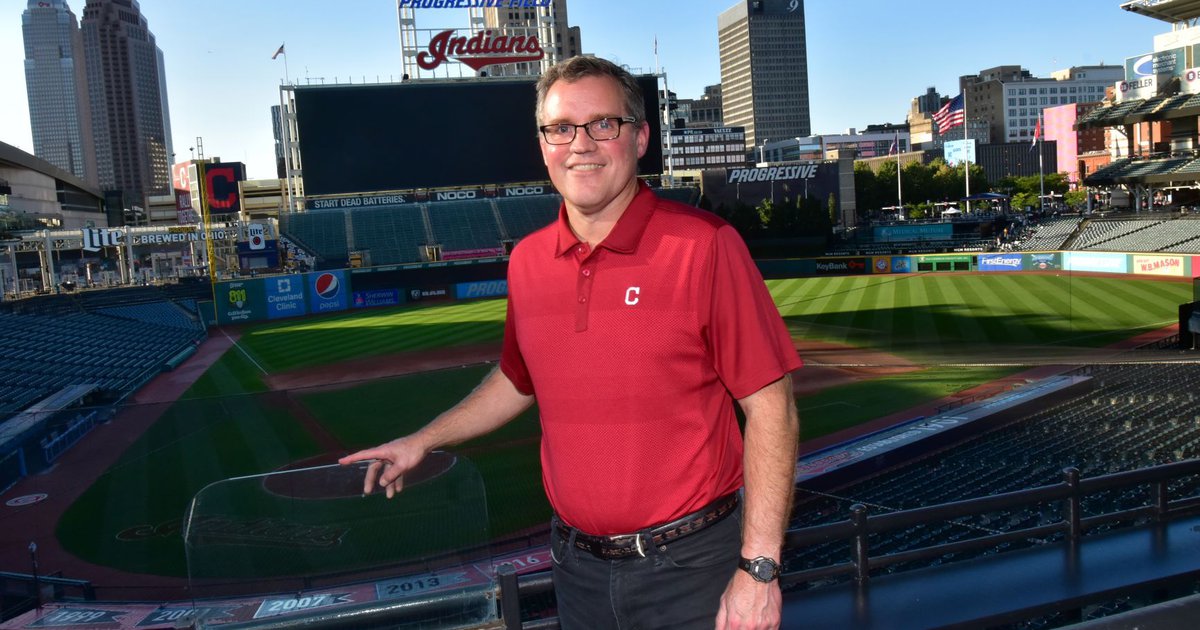
In Cleveland, it doesn鈥檛 matter if it鈥檚 Thursday.
If the Indians are in town, it鈥檚 time for the grownups to play hooky. In their red T-shirts and baseball caps, fans of the team pack the trains, heading towards Progressive Field, with Cleveland鈥檚 skyscrapers near enough for envious office workers to almost field a fly.
Doesn鈥檛 matter either if the season ended as this year鈥檚 did, with mid-September鈥檚 hope for a postseason spot dying one sad game after another.
Win or lose, the Indians never have a problem recruiting employees 鈥� drawn by the romance of the game, plenty of college graduates are eager to work in baseball.
So why would someone like Brian Barren, president of business operations for the team, get involved with a program to help adults who left college come back 鈥� maybe for a degree, maybe for a certificate?
鈥淚鈥檓 a big believer that education is transformational and provides the platform for changing the trajectory of someone鈥檚 life,鈥� Barren said, sitting in one of the stadium鈥檚 suites.
Barren serves on the board of . While he came to the board with an interest in mentoring Cleveland鈥檚 teenagers as they move into college, 鈥渢he adult piece has been fascinating for me personally,鈥� he said.
College Now is part of , a national collaboration of organizations dedicated to helping adults return to college.
In his position, Barren has something that most of College Now鈥檚 board members don鈥檛 鈥� the ability to use Cleveland鈥檚 love of baseball to influence the influencers among Cleveland鈥檚 business community so they will step up to the plate to further the education of Cleveland鈥檚 citizens.
It鈥檚 important.
In Ohio, just over one in four adults has a bachelor鈥檚 degree or higher. One in five adults are people who began college, but didn鈥檛 finish. College graduates typically command higher earnings. But adults who don鈥檛 finish don鈥檛 get the earnings bump that comes with a diploma. Worse, they are often saddled with college debt they can鈥檛 afford to pay.
Meanwhile, the labor market is tightening, and jobs are going unfilled.
Northeast Ohio, with its population of 4.3 million, should be producing 37,600 college graduates a year, based on national averages. Instead, only 31,300 earn diplomas, according to the report by Team NEO, the region鈥檚 business attraction organization.
In information technology, for example, there were 12,661 openings for computer workers of all types in 2018, including 5,388 entry level positions. Meanwhile, in 2017, the region鈥檚 post-secondary institutions awarded a total of 2,216 certifications, leaving 3,172 positions begging.
Northeast Ohio retains a strong manufacturing base 鈥� for now. But labor shortages threaten it. In manufacturing, there were 2,063 entry level openings for skilled metal and plastic workers, including welders, but only 106 certificates awarded 鈥� a talent gap of 1,957 positions.
The Graduate! Network鈥檚 national * research shows that most businesses don鈥檛 have active partnerships with local learning institutions. Yet, 97 percent of businesses surveyed for that report in Cleveland said they鈥檇 be interested in developing a partnership.
College Now can help, said Julie Szeltner, senior director of adult programs and services. It has relationships with local learning institutions to facilitate the conversation.
Companies win with a better-skilled workforce. Employees win because their credentials can command higher wages. Significantly, the region wins in terms of competitiveness. Szeltner鈥檚 boss, College Now鈥檚 chief executive officer Lee Friedman, puts it this way: 鈥淚t has to happen in Northeast Ohio or else we鈥檙e going to go out of business.鈥�
So, what position do Brian Barren and the Cleveland Indians play?
It鈥檚 up to Barren to influence not only the team but the entire team of Cleveland鈥檚 business community. Barren knows them well, because many rent suites at the ballpark or buy sponsorships. He serves on a College Now subcommittee to build better networks 鈥渨ith key leaders in the business community鈥� to connect them to College Now鈥檚 resources.
鈥淰ery tactically, one of the things that we do is host a College Now board meeting here for an Indians鈥� game. We generally have high attendance on that specific game day,鈥� he said. 鈥淎nd it is an opportunity.鈥� Some of the stadium crew working at Progressive Field those days will eventually become year-round part-time employees of the Indians, working the same type of job, but at a supervisory level, with other tasks during the off-season. The team employs about 200 full time.
鈥淲e're hiring people that are actually moving through that progression,鈥� Barren said. 鈥淚t's intentional, it's methodical, and it's planned. Just like baseball players have a minor league system, we look at that as our minor league or our farm system for the development of people to enter the business side.鈥�
For example, he said, he referred a custodian to College Now, who helped with counseling and enrollment. Could that custodian, with the right degree, ever become an accountant for the Indians?
鈥淎bsolutely yes,鈥� Barren said.
Full-time employees can qualify for the team鈥檚 $5,000 annual undergraduate tuition reimbursement program.
For anyone who wants to go back to school 鈥� including the team鈥檚 employees 鈥� College Now wants to provide support and encouragement. Unlike baseball, where one team always loses, in College Now鈥檚 ball field everyone wins 鈥� the adults returning to school, the colleges filling classrooms and the employers desperate to find the right hires.
And so, Barren is stepping up to the plate 鈥� making his pitch to his fellow business people. 鈥淚f employees don鈥檛 have the basic tools, because they are under-educated, they are actually holding back the [entire] workforce in Northeast Ohio,鈥� he said. 鈥淭he challenge these companies in Northeast Ohio have is that they can鈥檛 keep up with the demands of their customers. Then it鈥檚 a vicious cycle.鈥�
On any game day, Barren can track the local economy simply by walking into the stands where the cheapest tickets sell for $15.
鈥淭he socioeconomic viability of Northeast Ohio is critically important to the success of our professional sports teams, particularly in baseball,鈥� he said.
鈥淚f [our fans] don鈥檛 have a good enough job, they can鈥檛 come to games,鈥� Barren said. 鈥淥ur attendance will be lower. Our revenue will be lower. And with no salary cap, our team payrolls will be lower. It鈥檚 increasingly more difficult to compete against big market teams that have different resources and capabilities than small market teams like Cleveland.
鈥淲hat are we going to do to address that?鈥� he asked rhetorically. 鈥淲e鈥檙e going to try and find a way to better educate our people, so people can buy a ticket.鈥�
*The Bridging The Talent Gap survey was funded by Walmart
Interested in staying up to date on education and workforce policy? Subscribe to our newsletter to receive updates on the latest from our experts.
More 麻豆果冻传媒 the Authors
Related

Quality Principles for Workforce Pell Programs


