Leslie Villegas
Senior Policy Analyst, Education Policy
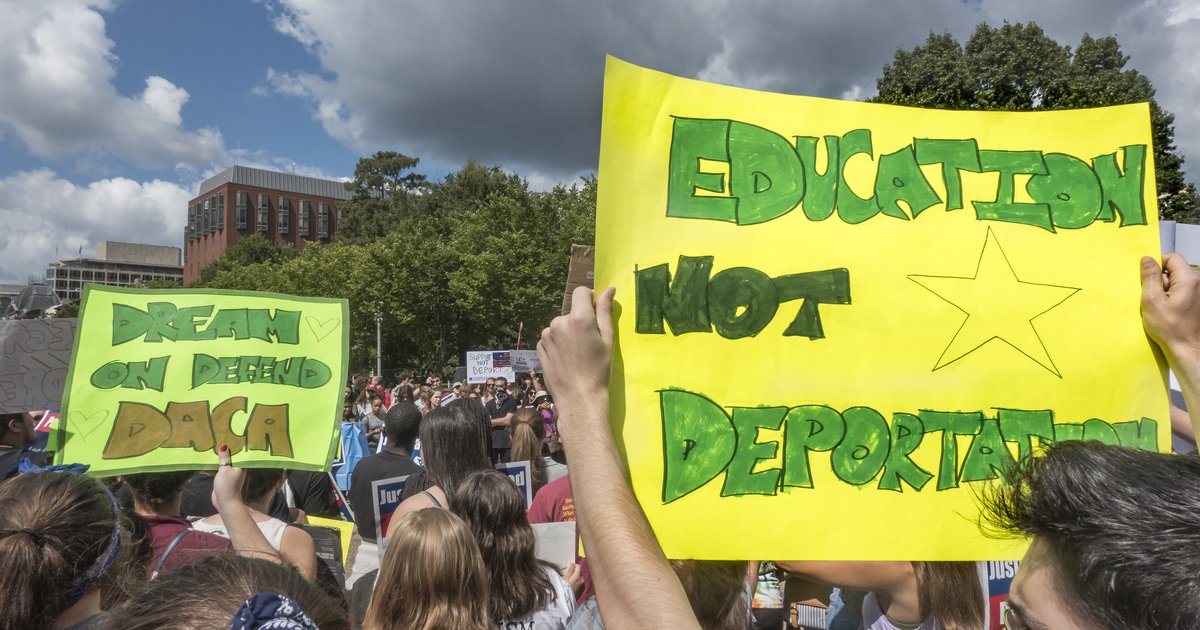
The Tennessee General Assembly is considering that would authorize school districts to require parents to prove their childā€™s legal status upon enrollment. School districts would be authorized to charge families tuition if they cannot show proof of legal status. And ultimately, school districts would be able to undocumented students the ability to enroll in Kā€“12 schools if students cannot do either. Tennessee is not alone as are considering restricting undocumented studentsā€™ access to a free public education. These proposed changes are direct attacks on a long-standing Supreme Court decision known as .
In 1982, the Supreme Court held in Plyler that the Equal Protection Clause of the 14th Amendment precludes states from withholding funds from school districts that would be used to educate children who were not ā€œlegally admittedā€ into the U.S. This case started as a class action suit in Texas where some districts were denying enrollment to these children and the legislature had passed laws that withheld state funds for undocumented Mexican students.
In its ruling, the Supreme Court considered whether a ā€œsubstantial state interestā€ was involved in preventing children of undocumented immigrantsā€”who may be undocumented themselvesā€”from attending public school. In the end, the court concluded that the costs associated with having a substantial part of society be uneducated and illiterate was too great to bear, to both the nation and the innocent children being harmed by the policy.
Efforts to are often shrouded under the of relieving states of undue financial pressure caused by undocumented students. These efforts are often based on misconceptions about undocumented students and the ā€œburdenā€ they place on Kā€“12 schools and taxpayers.
Here are three facts people often get wrong about undocumented students.
1. Undocumented students represent 1 percent of Kā€“12 students and do not fit a stereotypical mold.
Although it is difficult to know the size of the undocumented population in Kā€“12 schools, , a bipartisan political organization, estimates there were approximately 620,000 undocumented students enrolled in 2021ā€“about one percent of total school enrollment that year.
A common archetype of ā€œan undocumented studentā€ is that of a recently arrived adolescent student of Latino heritage. However, undocumented students span all age and grade bands and reflect the demographic diversity of the U.S. population. According to the news site , ā€œMost undocumented students in U.S. colleges and universities have resided in the country since childhood or adolescence.ā€ In fact, more than 30 percent of these students arrived in the U.S. before the age of 10 and just over 40 percent arrived between the ages of 10-16. Demographically, undocumented college students are 45.7 percent Hispanic, 27.2 percent AAPI (Asian American Pacific Islander), 13.8 percent Black, and 10 percent white, with 3.4 percent falling under ā€œotherā€ categories.
2. Undocumented students and their families generate revenue that goes towards their education.
Kā€“12 schools are funded by revenueā€“and undocumented households contribute to all three funding streams. According to the , undocumented households paid $75.6 billion in taxes in 2022: $29.0 billion in state and local taxes, and $46.6 billion in federal. A by the Niskanen Center found that ā€œundocumented immigrants make substantial contributions to the tax base that funds public education. Notably, in 40 out of 50 states, undocumented immigrants pay a higher percentage of their income in state and local taxes than the top 1% of households.ā€
In addition, (DACA) recipientsā€”the federal program that offers young professionals protection from deportation and the right to workā€”have in wages to the U.S. economy, plus an additional $33 billion in combined federal, payroll, state, and local taxes in the past decade. And according to the Center for American Progress, DACA recipients collectively earn about annually and contribute nearly $2.1 billion to Social Security and Medicare.
All of these economic benefits to society are at stake if Plyler is allowed to be undermined as research has ā€œfor the macroeconomy, education is a catalyst for human and social capital development, driving long-term economic growth.ā€
3. Cost estimates attributed to undocumented students are overly inflated and are not rooted in real education expenditure data.
Those who want to deny undocumented students entry into public schools often sensationalize the amount of financial resources needed to educate them. Superintendent Ryan Walters, for example, claims Oklahoma spent on educating ā€œchildren of undocumented immigrantsā€ in 2023. This figure an anti-immigration organization attempting to quantify the costs of undocumented residents on state taxpayers. The methodology behind this estimate, however, has been described as ā€œā€ as it inflates both the cost and number of undocumented immigrants and undercounts their tax revenue.
Estimating the cost of educating undocumented students is complicated at best. To produce accurate estimates, we would need to know what services undocumented students need that students with legal authorization do not, and how much they cost. This is difficult when undocumented studentsā€™ educational needs may be nearly the same as that of many of their U.S.-born classmates.
Students who benefit from Plyler should not be conflated with the students identified as English learners (ELs), the . If an undocumented student is identified as an EL, these services are funded by federal Title III grant funds, as well as state and local general fund revenue for Kā€“12 schools. In fact, provide extra funding for EL students. This funding is linked to a studentā€™s EL status, not undocumented status. Therefore, it is misleading to attribute the cost of EL education to undocumented students. Even if there wasn't a single undocumented student in a school, they would still be responsible for meeting the needs of EL students.
The last have brought forward an intricate web of to ensure linguistically diverse immigrant-origin students are afforded the right to a free, adequate, and meaningful education. When it comes to undocumented students, we know that when they are provided educational opportunities, and good. In Plyler, the Supreme Court ruled that denying undocumented students access to equal educational opportunity does not serve the stateā€™s interest. Given the continual politicization of education we are seeing today, state leaders should focus more on protecting the civil rights framework that ensures access to education for allā€”instead of dismantling it.
Senior Policy Analyst, Education Policy