Lisa Guernsey
Senior Director, Birth to 12th Grade Policy; Co-Founder and Director, Learning Sciences Exchange
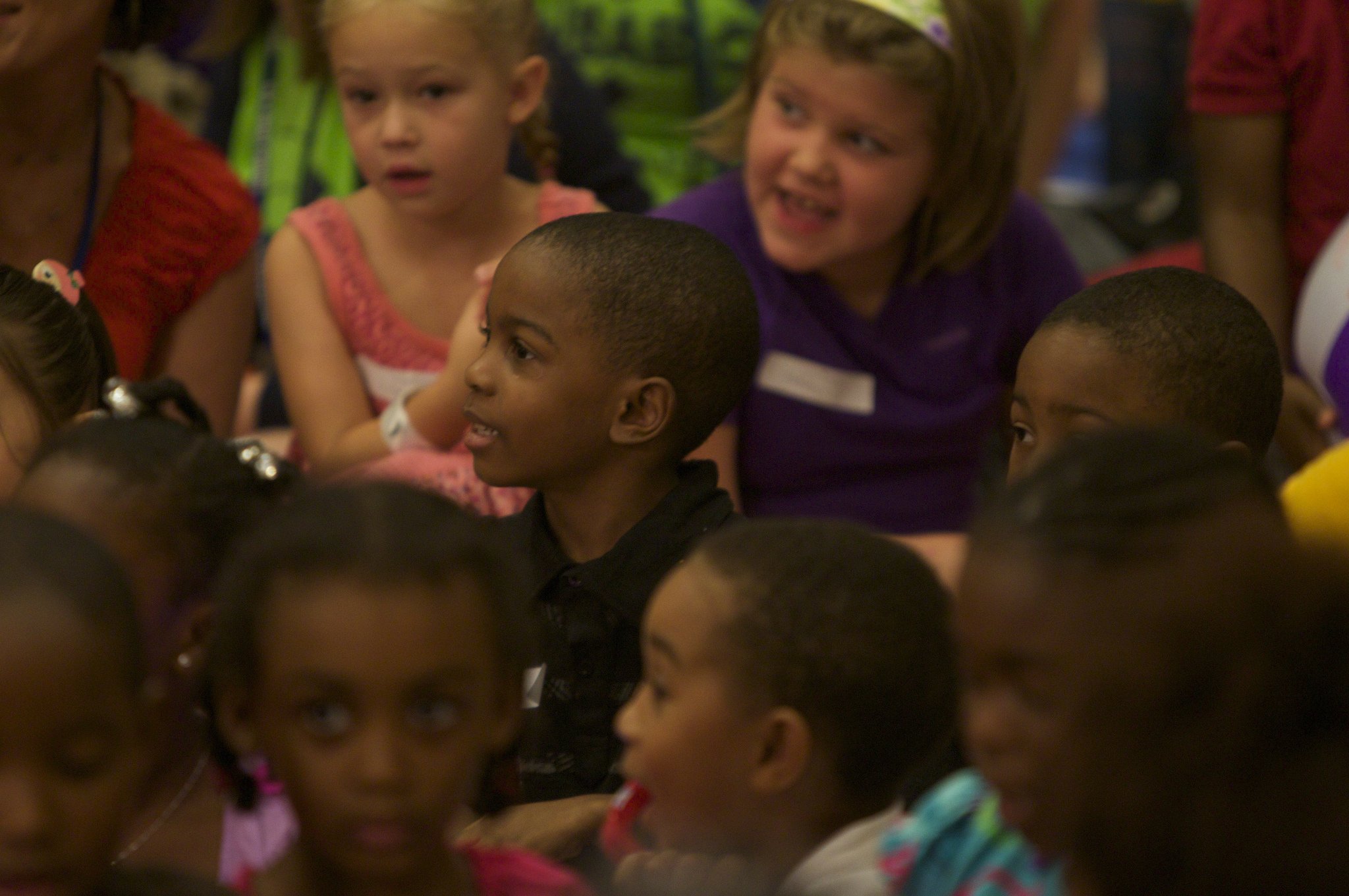
It is easy to talk about improving education for all children and commonly accepted, even laudable, to focus on improving education for children from low-income families. But despite living through 10 years of No Child Left Behind, the law that spotlights educational outcomes for particular subgroups*, it is still uncomfortable for many of us to talk about differences between black** children and their non-black peers. Last month, two new reports and a White House event, blew past that discomfort to draw attention to black children in the United States鈥� early childhood centers and schools.
One of the reports, by the National Black Child Development Institute, tackles controversy from the start with a title intended to open our eyes to the damage that happens when skin color becomes equated with negative attributes. To dismantle preconceptions, the report highlights statistics that contradict stereotypes: A higher percentage of African American children ages 3-6 are able to read words in a book compared to children of all other races; only 13 percent of black mothers are without a high school diploma; less than one-third of Head Start children (0-5) are black.
The other report, , analyzes data from a 2005 study of the quality of pre-K and child care settings for young children across the country. , , that children learn when they are in settings that rank high on measures of quality, such as how teachers interact with children (e.g., are they initiating and sustaining one-on-one conversations?) and what resources are available for social and cognitive stimulation (how many books are available in the reading corner, are there a variety of hands-on materials that children can explore in small-group activities?)
Yet as made clear in this report, black children are less likely to be enrolled in good pre-K and child care centers. 聽鈥淭he majority of children from low-income families, and African-American students in particular, are without access to high-quality early childhood education,鈥� the report states. Of the centers attended by black children, only 25 were rated as 鈥渉igh quality,鈥� while that rating applied to 40 percent of the centers attended by Hispanic children and 36 percent of those attended by white children.
Quality ratings are far worse for 鈥渉ome-based鈥� child care — those providers who are paid to take care of groups of children in their homes. More than half of those settings attended by black and Hispanic children (53 and 63 percent, respectively) received 鈥渓ow鈥� ratings. The report was published by the Center on Enhancing Early Learning Outcomes, the National Institute for Early Education Research, and the White House Initiative on Educational Excellence for African-Americans.
Previous research, led by Walter Gilliam at Yale University, has shown for African American children compared to white children.
The White House Initiative held an event on these reports in November and has been turning up the volume on supporting black students since it 聽was . It is , a former kindergarten teacher who served as senior education policy advisor to the Senate Committee on Health, Education, Labor and Pensions (HELP) under the leadership of Sen. Tom Harkin and also worked for the late Sen. Ted Kennedy. Johns鈥� responsibilities include increasing the school-readiness of African-American children and expanding their access to high-quality education from early childhood up through college.
The topic also got a lot of play in Boston earlier this month during the annual meeting of the Alliance for Early Success, a national group that aims to help states advance early learning policies for children from birth through age 8 (full disclosure: AES is one of our funders at the Early Education Initiative). One of the sessions, attended by at least 25 leaders of advocacy and philanthropic organizations, was dedicated to discussion of the essays that are part of NBCDI鈥檚 report. The session led to an emotionally charged but energizing discussion of how to talk honestly and openly about issues of race — and how to be productive and proactive when bringing issues of race into education dialogues.
There is a tension throughout these discussions between the need to identify and rectify disparities and the desire to avoid emphasizing data that puts black children in a negative light or reinforces stereotypes. It鈥檚 hard to see those tensions lessening anytime soon. Here are just a few of the questions that came out of the Boston meeting:
1. Can we get to the bottom of why black children are more likely to be enrolled in child care of poor quality? 聽Hakim M. Rashid, a professor of human development at Howard University, puts it this way in the NBCDI report: 鈥渢he education of young African American children, and boys in particular, at all levels, is a national disgrace.鈥� 聽It cannot simply be a matter of affordability, given that other subgroups often associated with low incomes, such as Hispanic children, are not as likely to be enrolled in poor-quality settings. What will it take to transform the quality of education for African American children?
2. The take-aways from these reports differ depending on audience. How should different messages be delivered to ensure children are supported? For policymakers, for example, the message is the need for continued pressure on equality of access — on ensuring that children of all races and ethnicities have the chance to enroll in good early learning programs and elementary schools. For educators, should there be a more nuanced message? Much of the NBCDI report, for example, talks about holding high expectations for black children while simultaneously being respectful of — in fact, learning from — the strengths these children鈥檚 home cultures could bring to their development. (A recent by my colleague Conor Williams raised a similar point.)
3. Would it help to focus not on race but on ensuring that our definitions of 鈥渆ffective teaching鈥� or 鈥渉igh-quality settings鈥� include indicators of whether teachers are able to provide all children — including black children — with the interpersonal interactions and resources they need to succeed in school? Or should there be an even more intentional focus on altering classroom procedures or teaching strategies to help black children specifically? (This is a key question 聽in measuring the effectiveness of teachers for dual-language learners as well.)
4. Will the growing number of children from mixed race backgrounds make these discussions moot — or even more complicated? At the end of the Boston discussion, for example, an attendee who looked to be in her late 20s, and who described herself as biracial, pointed out that it is time to upgrade how advocates, educators and decision-makers talk about race in education. The next generation, she said, may not know where to place themselves in conversations about about 鈥渂lack families鈥� or 鈥渂lack children鈥� and will inevitably look at these issues in a very different way.
Lauren Hogan, director of public policy for NBCDI, says the institute plans to hold similar discussions in states and localities around the country in the coming year. If you are part of those events, please let us know how the conversations unfold. As we examine policies aimed at helping all children achieve excellence, we want to be attuned to what is working at the state and local level to ensure African American kids are not left behind.
* Using NCLB and its spotlight on achievement gaps as a starting point, one of the authors of an essay in the NBCDI report — Kristie Kauerz of the University of Washington — lays out the components framework for a PreK-3rd-grade approach designed to narrow those gaps and focus on enabling all children to excel. As Kauerz writes, “We must both improve children鈥檚 early聽learning experiences prior to entering kindergarten and include elementary聽schools in our reform vision.”
** The NBCDI report uses “Black” to聽describe children聽and families who are both racially black and of聽African origin throughout the diaspora,聽so I did the same in this blog post, (though with a the lower-case ‘b’ to match with the use of ‘white’ per A.P. style). I used “African American” when those were specific words used research studies, in quotes, and in titles of reports or initiatives.
Senior Director, Birth to 12th Grade Policy; Co-Founder and Director, Learning Sciences Exchange