Passing the Pregnant Workers Fairness Act Leaves Lessons for the Future
鈥淪tories transcend politics. They have the power to unite us as humans and elevate all these issues to a moral level. That gives me hope that more is possible on the horizon," said Dina Bakst, A Better Balance co-Founder and co-President, during our joint event.

On June 27, the (PWFA) went into effect, ensuring that most pregnant and postpartum workers will be entitled to receive the reasonable and medically-necessary accommodations they need in order to continue working.
The new law is the culmination of a that arose from the lived experience of pregnant workers and new parents sharing their stories of facing bias, discrimination, and, often, job loss and financial hardship when employers denied requests for accommodations. At a time of deep partisan division and little action at the federal level on other critical care, gender equity and work-family justice policies, the PWFA and PUMP Act (an expansion of workplace lactation rights to an estimated 9 million workers that had previously been excluded) passed last December with overwhelming bipartisan support. As a result of PWFA, employers must now provide medically necessary, reasonable accommodations to the who work while pregnant each year.
Before PWFA and the more than two dozen state and local laws that have passed in the last decade, some workers, particularly those in low-wage, male-dominated occupations, were forced onto unpaid leave before their due dates, making them use precious leave time they鈥檇 hoped to use after the arrival of their baby to bond and recover. Some lost their jobs. Some lost their homes. The reasonable accommodations they requested were often relatively low lifts for employers and included things like appropriately fitting uniforms, the ability to work temporary light duty assignments while pregnant, additional bathroom or water breaks, or flexible schedules, yet there was no requirement that employers address these requests. And some pregnant workers never spoke up to ask about accommodations at all for fear of discrimination or retaliation, and either jeopardized their health and the health of their pregnancy, or left work.
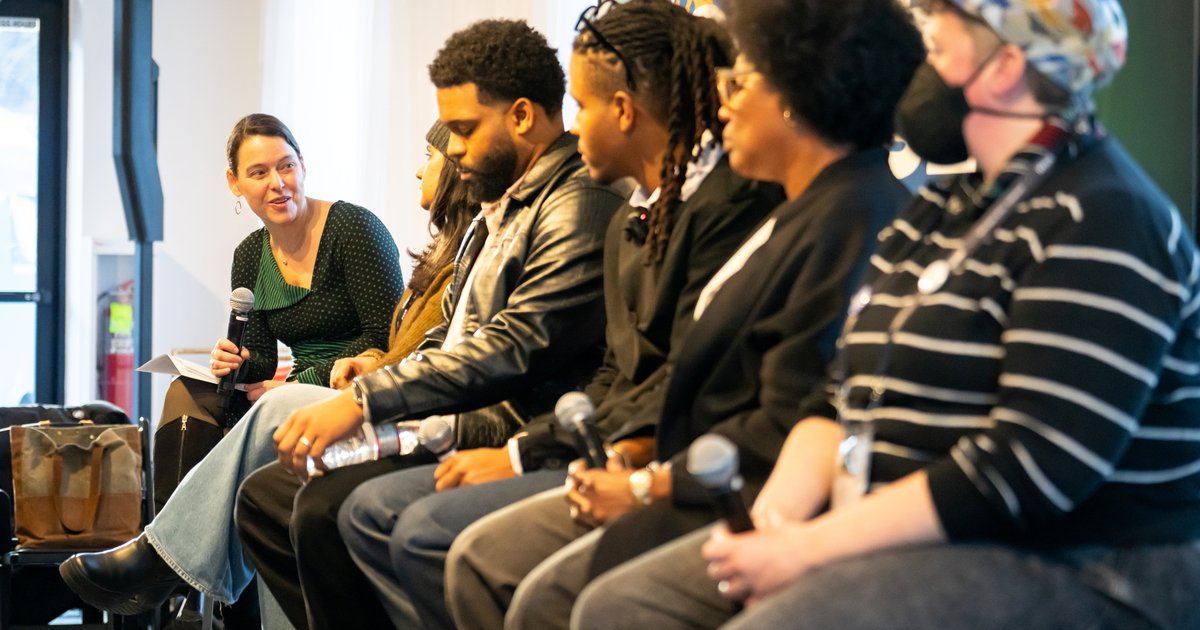
Just days after the law went into effect, the Better Life Lab co-hosted an event with A Better Balance to celebrate this win for family-sustaining public policy, explore what it took to pass, and analyze what lessons there are to learn to build on for the future of the care movement. A Better Balance, a national advocacy organization that uses the power of the law to advance justice for workers so they can care for themselves and their loved ones without jeopardizing their economic security, was a key player at every step of the policy development of and fight for the passage of the PWFA.
At our joint event鈥�The Pregnant Workers Fairness Act and the Future of the Care Movement鈥攚e dug into , A Better Balance鈥檚 comprehensive report on the path to winning PWFA. During this discussion, we also explored the eight strategies they identified as key to passing the groundbreaking civil rights law, with a particular focus on the power of storytelling and workers sharing their lived experience, how critical it is to forge broad alliances and diverse coalitions at the state and national level, the role of state policy wins, the engagement of businesses and business organizations, and the pathways to building bipartisan support.
Our event started off with a fireside chat, moderated by BLL Director Brigid Schulte, featuring Dina Bakst, ABB co-founder and co-president, and two workers who experienced pregnancy discrimination. The workers, Lyndi Trischler and Natasha Jackson, both reached out to ABB鈥檚 free legal hotline for help when they experienced pregnancy discrimination and wound up becoming ABB community advocates, sharing their stories. They were instrumental in driving widespread support for state PWFA laws and the federal bill. 鈥淭his movement has been grounded in the lived experience of workers,鈥� Bakst said. 鈥淭his has never been a policy solution in search of a problem.鈥�
In fact it was stories like Trischler鈥檚 and Jackson鈥檚 that sparked the movement in the first place, Bakst continued. As ABB writes in their new report: 鈥淧regnant workers needed immediate relief to protect their health and avoid devastating economic consequences. Instead, they routinely faced two impossible options: work without an accommodation and risk their health, or take unpaid leave鈥攐r worse yet, lose their job.鈥�
Jackson, a mother who experienced pregnancy discrimination twice, became an advocate for herself and others after the second instance ended in her losing her job, her home, and her marriage. The experience is also what provoked her to get involved in other efforts, such as the fight for raising the minimum wage in her home state of South Carolina.
Trischler, a police officer in Kentucky, said at the event that she was forced to take unpaid leave rather be granted desk duty when her protective gear would no longer fit during her pregnancy. At first reluctant to share her story, she became bolder the more she heard that she wasn鈥檛 alone. 鈥淚 wanted policy change, not just for myself, but for women coming after me," she said. (Schulte wrote about Trischler鈥檚 story and the quest for reasonable accommodations for pregnant workers in the in 2014鈥攐ne of the first journalists in the mainstream media to do so.)
In 2015, another story about Peggy Young, a pregnant UPS driver who was denied light duty, was key in shaping the PWFA. Many assumed that the U.S. Supreme Court ruling in Young v. UPS, finally provided pregnant workers the protections they needed. But in reality, the decision only created more confusion, Bakst said during the panel. In 2019, ABB published data showing that two-thirds of pregnant workers were losing cases under that flawed legal standard.
鈥淭hat data lit a fire,鈥� Bakst said. 鈥淚t became really apparent it was time for a legislative fix.鈥�
The two laws that many assumed ensured pregnant workers would receive fair treatment鈥攖he 1978 Pregnancy Discrimination Act and the Americans with Disabilities Act鈥攚ere instead failing pregnant workers. Bakst wrote an editorial in the New York Times,, detailing the reality of both laws鈥� loopholes:
Few people realize that getting pregnant can mean losing your job. Imagine a woman who, seven months into her pregnancy, is fired from her position as a cashier because she needed a few extra bathroom breaks. Or imagine another pregnant employee who was fired from her retail job after giving her supervisors a doctor鈥檚 note requesting she be allowed to refrain from heavy lifting and climbing ladders during the month and a half before her maternity leave: that鈥檚 what happened to Patricia Leahy. In 2008 a federal judge in Brooklyn ruled that her firing was fair because her employers were not obligated to accommodate her needs. We see this kind of case in our legal clinic all the time.
The stories in that piece served as an opening salvo of sorts, bringing public attention to the often devastating experience of pregnancy discrimination and calling for action.
A second panel, moderated by BLL senior fellow Vicki Shabo, explored how a broad, diverse and, at times, unusual constellation of organizational partners pushing for change helped Congress get this important law over the finish line last December. Vania Leveille, the senior legislative counsel for the ACLU, discussed how advocates worked on building connections and credibility, not just in blue states, but in red states and among Republicans and others who leaned conservative on the political spectrum via polling and local outreach to policymakers to highlight how the law would benefit their constituents.
鈥淧eople don鈥檛 want to vote against the idea of letting pregnant workers sit down if they need to,鈥� added Emily Martin, the vice president of the National Women鈥檚 Law Center, later in the discussion. She and others said that getting state-level laws passed鈥攐ften with unanimous support鈥攈elped show 鈥減roof of concept鈥� and build broad support for a clear national law.
The PWFA would also have, according to Stacey Brayboy, the senior vice president of public policy and government affairs at March of Dimes. Protections offered under the law will likely prevent complications and ensure Black pregnant workers are able to maintain economic stability during the pre and postpartum periods.
Some of the other key lessons for the future of the care and gender equity movements that panelists highlighted included:
鈥淐ome up with a long menu of different tactics,鈥� said Leveille.
鈥淲orking hard. Answering every question. Not taking 鈥楴o鈥� for an answer. Staying at the table, building trust, working through disagreements for the good of a greater cause,鈥� said Brayboy.
鈥淲inning is possible,鈥� said Martin.
鈥淭he power of value-based messaging to resonate with people across the political spectrum,鈥� said Bakst.
鈥淧ersistence. Collaboration. And persistence again,鈥� said Sarah Brafman, the national policy director at A Better Balance.
鈥淔ind the sweet spot.鈥� And listen across differences, said Marc Freedman, the vice president of employment policy with the U.S. Chamber of Commerce.
We hope the Pregnant Workers Fairness Act will allow more pregnant people the opportunity to thrive, as it is their human right to be able to do so. We also hope it will pave the way for many of the policy advances we need to see to advance gender and racial equity through more investment in family-sustaining policies like paid family and medical leave, child care, and other elements of care infrastructure.
More 麻豆果冻传媒 the Author
Issues
Programs/Projects/Initiatives
Related

Men and Care: Key Findings and Recommendations from the Better Life Lab

Care Innovation Hub

To Appeal to 鈥淢iddle America,鈥� Creatives and Studios Should Focus on Authentic Work, Family, and Care Stories