
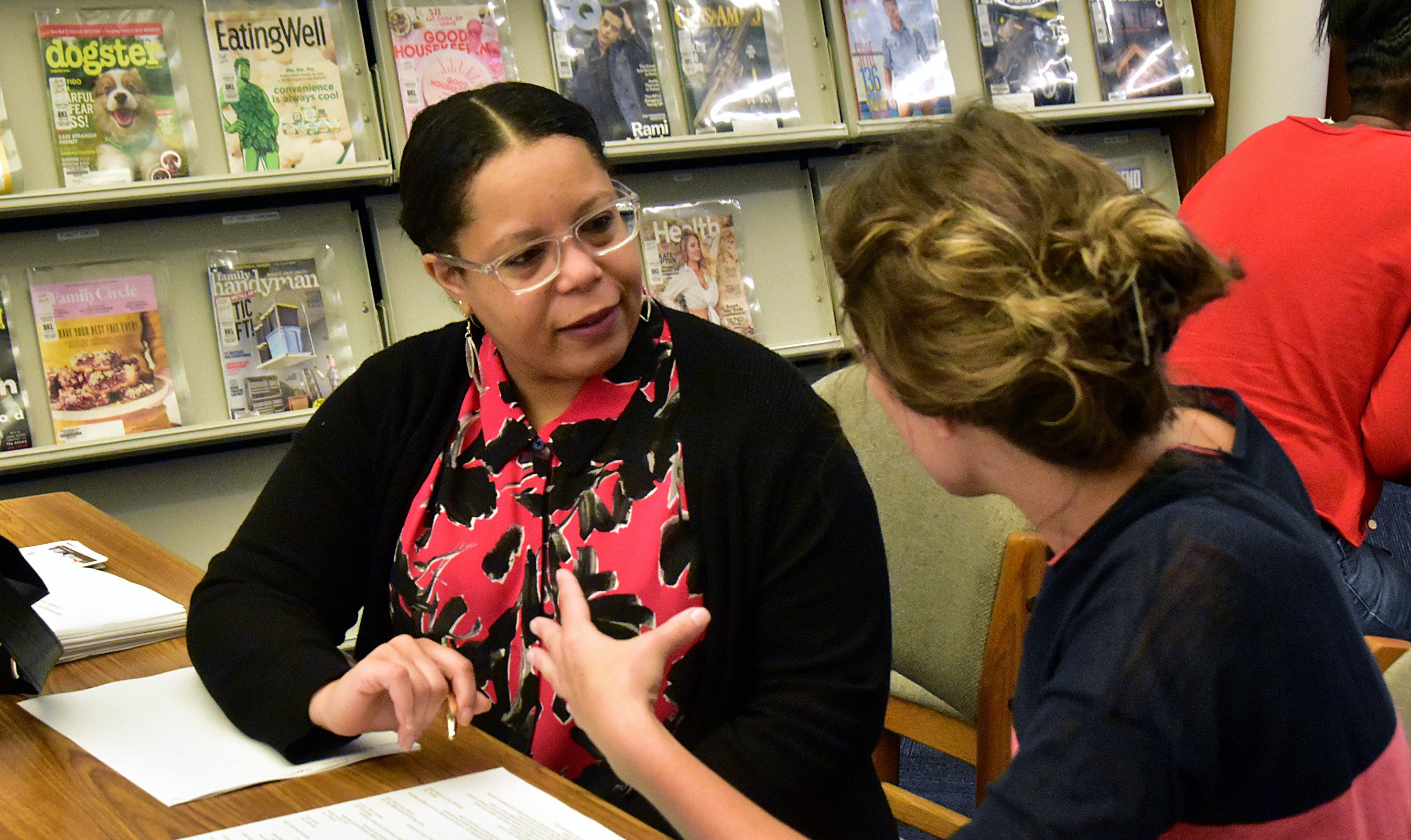
Inside the library, all was quiet as is usual in libraries 鈥� just whispers and murmuring.
Even so, nobody shushed Patricia Gray, 58, and Victoria Gallagher, 57, as they hugged in the corridor, alternately weeping and smiling, trying to keep their joy courteous, given the location.
鈥淲e鈥檙e miracles, that鈥檚 what we are,鈥� Gallagher said.
Gray and Gallagher hadn鈥檛 known each other before that September Saturday, when they met at the Brooklyn branch of the for an Adult Scholars Summit held by an affiliate of a national organization.
For 50 years, College Now has maintained a laser focus on increasing post-secondary educational attainment in the greater Cleveland area, helping 29,000 a year. Mentorship matters.
According to a recent survey, , one in five adult learners surveyed identified mentoring as helpful in achieving education goals. Even more wanted specific advice geared towards career goals.
Although College Now has recruited an impressive 1,100 mentors 鈥� mainly for high-schoolers and younger college students — there simply aren鈥檛 enough mentors for adults returning to college after years away from the classroom.
So, at least for now, if the adult learners were going to be mentored, they鈥檇 have to mentor themselves. And, for guidance on career-building basics like LinkedIn and resume-writing, well, they鈥檇 have to do it as a group.
Which was, as it turns out, plenty OK.
The connections forged between people like Gray and Gallagher were the best part. College Now wisely set aside time so participants could exchange business cards 鈥� and, more importantly, encouragement.
As adult students well beyond traditional college years, Gray and Gallagher shared a common life story with others in the room. To be in college, they and many others there had to struggle with poverty and crippling self-doubt. It鈥檚 not only the story in Ohio, but across the nation. It鈥檚 a story The Graduate! Network is trying to change–one comebacker at a time.
鈥淵ou think you鈥檙e the only one, until you are put in this situation where you can meet each other,鈥� Gallagher said. 鈥淚t鈥檚 a big relief.鈥�
Gray nodded and pressed Gallagher鈥檚 hands in hers. 鈥淣obody would have thought I鈥檇 be where I am today,鈥� she said.
In Ohio, just over one in four adults has a bachelor鈥檚 degree or higher. One in five adults are like Gallagher 鈥� people who began college, but didn鈥檛 finish. College graduates typically command higher earnings. But adults who don鈥檛 finish don鈥檛 get the earnings bump that comes with a diploma. Worse, they are often saddled with college debt they can鈥檛 afford to pay.
Gallagher bounced around the country as a military spouse, earning an associate degree while she stayed home, raising five children. When her husband left the Marines, they moved to Medina, Ohio. Over time, Gallagher said, she faced escalating domestic abuse. 鈥淗e even threw things at me in the grocery store.鈥� Struggling to cope, she turned to alcohol, eventually conquering her three-year addiction.
Next? An ugly divorce. The children lived in the family home with their father, and 鈥淚 was homeless during the divorce, until the court intervened.鈥�
She turned to en route to a four-year degree, earning a second associate degree. The Women In Transition program there connected her to College Now, which is helping Gallagher graduate from with a bachelor鈥檚 degree in social work 鈥� she should get her diploma in 2020.
鈥淚鈥檝e already been offered positions,鈥� she said.
Until she finishes, Gallagher cleans houses. 鈥淚t鈥檚 how I pay my bills,鈥� she said. 鈥淪ometimes I clean three or four houses a day.鈥�
Because of her $2,000-a-semester scholarship from College Now, Gallagher can clean less, giving her time for the unpaid internship both required for graduation and key to building a career.
Gray鈥檚 story? 鈥淔ifteen years of depression and addiction,鈥� she said. 鈥淚 never thought that messing up my life would now allow me to help others.鈥�
After Gray鈥檚 mother died when Gray was 34, Gray spiraled into depression and addiction. Her cousin raised her son while Gray slept in shelters and on friends鈥� sofas.
By 2010, Gray managed to get clean and enroll at Cuyahoga Community College. In 2017, she earned an associate degree in information technology. 鈥淥nce I accomplished that,鈥� she said, 鈥淚 realized there wasn鈥檛 anything I couldn鈥檛 do.鈥�
Except — she ran out of money.
College Now rescued her dream with scholarships. Gray expects to earn a bachelor鈥檚 degree in IT project management from in 2020. Meanwhile, she juggles schoolwork with a counseling job and IT consulting work.
For Gray, the diploma will mean 鈥渓iving a dream that was deferred and showing others that no matter where you were, you don鈥檛 have to stay there.鈥� Gallagher offered one word: 鈥淪tability.鈥�
In the library, both women talked about the most basic benefit 鈥� respect. Instead of being talked to and lectured, their education has already put them in the position of being listened to and treated as knowledgeable professionals.
鈥淔or the adult learner, there are so many barriers that have to be addressed,鈥� Gray told the group earlier. 鈥淵ou need that support. A lot of people who aren鈥檛 on this journey don鈥檛 understand what this is about.
鈥淚鈥檓 so grateful this is being recognized,鈥� she said, turning to the College Now staffers who organized Saturday鈥檚 event. 鈥淭hank you.鈥�
Interested in staying up to date on education and workforce policy? Subscribe to our newsletter to receive updates on the latest from our experts.
More 麻豆果冻传媒 the Authors
Related

Quality Principles for Workforce Pell Programs


