Haley Swenson
Senior Writer and Researcher, Better Life Lab
Mother AI Founder Stephanie Leblanc-Godfrey Wants to Make Sure AI Isn鈥檛 One More Burden

Stephanie LeBlanc-Godfrey self-identifies as a nerd. She鈥檚 felt pulled toward numbers, analytics, and experimentation her whole life. She loved math and science growing up and studied electrical engineering in college.
In her first job as an engineer, however, she felt isolated. She was the only young Black woman in her work world, and her colleagues all seemed to be in different life stages. She decided to pivot to a space that felt more comfortable and has had a long and successful career, first in digital media and now in the technology sector for the last decade.
She鈥檚 been following the public conversation about artificial intelligence (AI) for years in her work. But she was shocked when one day in 2023 her kids came home from school talking about AI chatbots. 鈥淢y husband and I had been engaging with it and talking about it, but once my kids said the words and that they knew what it was, I was like, wait a minute. I perked up,鈥� LeBlanc-Godfrey said. She knew this wasn鈥檛 just another social media fad, like the latest TikTok dance, that her kids would be interested in one day and forget about the next. AI was already changing the way we work and live, and she knew it would only become more present in their lives. Yet even as someone working in the technology space, she realized she wasn鈥檛 equipped to help her kids navigate these new tools.
鈥淚 quickly realized that there is a need for relatable, digestible, accessible information around AI. At the intersection of technology and parenting, there's questions about screen time, there's cyberbullying, there's privacy, there's bias, there's social media, there's deepfakes,鈥� said LeBlanc-Godfrey.
And if she didn鈥檛 know enough to feel confident in helping her kids through that journey, then what about other parents who might even be less adept at these technologies and the possibilities and hazards they create? That led her to launch , a resource for parents like her who are trying to understand AI better, not only so they can help their kids with it, but so they can use it to make their lives easier. She says she鈥檚 on a mission to 鈥渇latten the technology learning curve for parents so that they can make the best decisions for their family within the digital landscape.鈥�
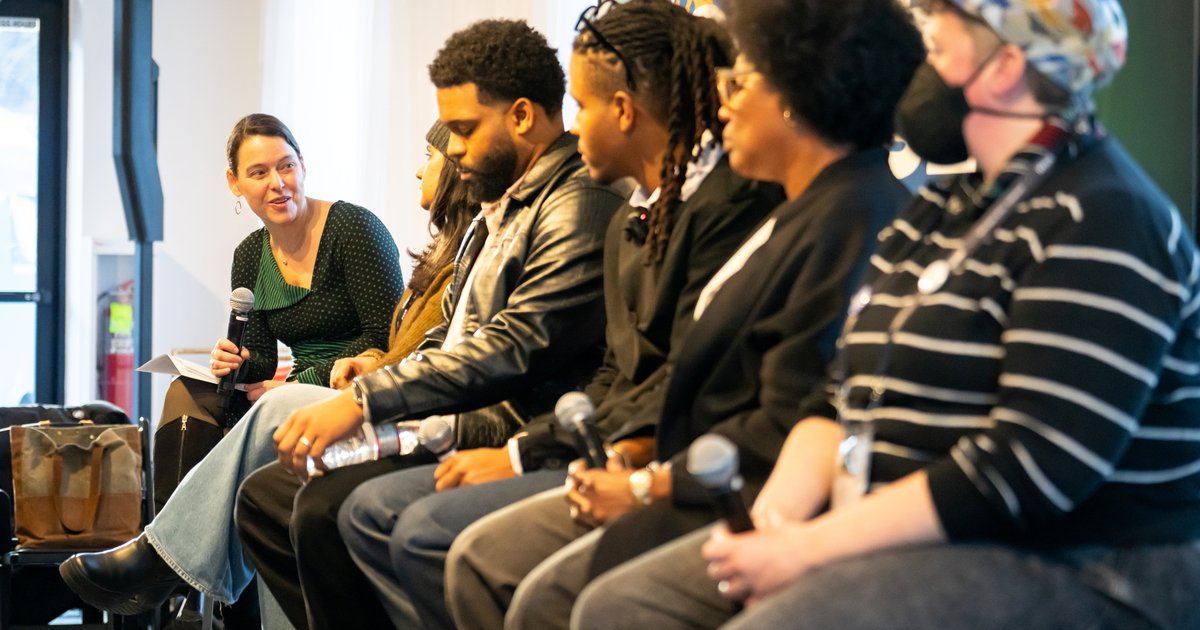
LeBlanc-Godfrey joined our BLLx event on AI, Apps, and the Mental Load in July. I recently followed up with LeBlanc-Godfrey about the pressure on parents, especially moms, to educate their kids on quickly evolving technologies and her advice to parents just starting to tackle the questions around kids and AI.
Our conversation has been lightly edited for clarity and length.
Haley Swenson: You see AI as more of an opportunity for parents to connect with their kids and learn together than something they should worry about. Can you talk a little bit about how gender comes into AI and parenting? I think that with all this 鈥渁nxious generation鈥� talk, many parents feel nervous about their kids and how they use technology. Is AI one more thing that mom mainly tends to carry the emotional labor of, when it comes to monitoring the kids鈥� use of it, and talking to their kids about it? Is this one thing moms will handle more than dads, or are you seeing more gender parity there?
Stephanie LeBlanc-Godfrey: One thousand percent it's something that is on the hearts and minds of moms, because we worry about everything! We are scrolling in the middle of the night and reading all the things to look out for with our kids. Technology can fit into that big list of things mothers are worrying about, trying to figure out a plan for. However, I think there鈥檚 an opportunity to open the door for more conversations with dads on this and letting them take the lead on thinking about. Lots of dads love gadgets and new technologies and will be excited to explore this with their kids.
My husband and I met in undergrad and are both engineers and techies. We are naturally interested in and talk about technology together and with our kids. We make it a conversation so it鈥檚 not just one of us thinking about it.
When it comes to kids using technology, to screen time and the apps, particularly Instagram and Tiktok, and the content that they're seeing, there鈥檚 this two-edged sword where鈥� Tiktok has been responsible for us going to some really cool places! Because my daughter will say, 鈥淗ey, I saw this exhibit, or Kendra Scott has something, or the ice cream exhibit is in New York, or this or that,鈥� and it's like, 鈥淎ll right, great! [They] save me from having to look up things for us to do that they will be interested in, because they're finding it.鈥�
But then there are other things, where they will repeat something they鈥檝e [heard or seen online]. Like a 鈥渟cience experiment,鈥� where you could supposedly make a coin move a battery or something like that. They would look at things and be like, 鈥淥h, yeah, this is true.鈥� Whenever they show us something like that science experiment鈥擨 literally went into Google and searched to see if it was real. And all the videos debunk it, and I showed them. We do a lot of leveling with them on what they share with us and whether it鈥檚 real or not. Just because we hear it and someone sounds confident doesn't mean you believe it, which means you have to go to additional sources. The primary focus is teaching them how to be critical thinkers and how to verify what they see or read so they're not just believing the first video that you see about something.
Going back to the question about gender, I think this could be a great gateway for parents to work together on discussing and deciding, what are the rules of engagement around these things? And that can then open up conversations around other decisions that need to be made in the household and how you鈥檒l handle them.
Yes, [the project] is called Mother AI, but my husband always likes to add, 鈥淒ads too!鈥� And yes, I agree. Hopefully more dads.
Can you talk a little bit about AI as a unique technology? It鈥檚 a game changer compared to our conversations about social media or smart phones over the years. I think some parents are just really intimidated by it. I certainly have been. But you want us to see it as an opportunity. What are its benefits to us as working parents?
AI is this technology that has existed for decades, but it's always been integrated into a product or service. Our emails have a spam folder. That's an AI algorithm that's kind of making those decisions as to what's a legitimate email versus what's not. We鈥檝e all binge-watched things, and then been given similar recommendations. That's an algorithm that's behind it, tapping our credit cards, the weather that we see on our phones when we change different locations, the maps that we use every day to get directions on where we have to go. AI is incorporated into all those things.
But it hasn't been until now that we have these chatbots that allow people to engage with AI directly in the form of text, audio and video. That means we get an opportunity as individuals to play with AI in this new way.
A lot of the media around it has been almost like, 鈥淚s AI going to be an apocalyptic event? Is it going to take away all of our jobs?鈥� We've got all this that can really deter someone from ever wanting to touch or engage with this technology.
It can also help parents in their day-to-day household management, as well as personally and professionally. There鈥檚 a way that it could help you with meal plan planning. There's a way that it can help you have conversations with your kids when they ask you things that you don't even have the words to describe in age-appropriate or creative ways. It can be a partner with you in their learning journey and help with homework on a daily basis. It's a way to figure out and manage all kinds of problems or tasks within your household.
Like the other day, I used an AI chat bot to figure out how to maintain all of the systems within my home鈥攖he HVAC, the dishwasher, the refrigerator. It let me know how often I should be servicing them, what servicing looks like, whether it is DIY, or whether I need to hire someone. And then I [asked it to] put that in a table. So now I know, for example, apparently there's something in your dishwasher that you're supposed to clean out regularly. No one gives us a homeowners鈥� manual when we buy a home, or on how to live life as adults, and it can help with that. AI allows me to lean into my curiosity about things on my to-do list and get me a succinct answer and a tactical plan for delivering it.
And then on the content creativity side, you can say [to a chat bot], 鈥淗ey, this is my brain dump. Clean it up and make it sound like a professional email.鈥� Or, 鈥淢ake it sound confident.鈥� And instead of going from this complete, white space to being able to start with something, put it in and then have a conversation to get to your desire.
Using AI chatbots can be the on-ramp for folks to engage with AI technology as a whole. That allows folks to be creative and confident in the technology and then learn more about it, and at the same time, learn the issues and the risks that are associated with it. That鈥檚 important. But you鈥檒l understand those risks better if you understand how it works and why people want to use it.
What an excellent opportunity to show your kids the process and the mental work it takes to solve a problem or answer a hard question, to make that visible in your interaction with AI. Your household maintenance example is great. It shows how many things you have to think about to keep their household functioning, and they also see AI isn鈥檛 just a one-stop-shop for answers. You had to work and think about how to communicate all that complexity to get what you wanted. And that鈥檚 a skill you have to practice.
Yes! The first prompt that I ever wrote for a chatbot was, 鈥淗ow can you help me? What do you do?鈥� And then we had a conversation. Start there. And if you do it with your kids sitting next to you and helping you, you鈥檒l be amazed by the ideas they have too.
There are so many concerns around education and kids using AI. Is it cheating? Are kids going to stop learning if they鈥檙e using this technology? I remember when we first got search engines. Before that, I would read through encyclopedias when I wanted to know about something. And that was often all the information that I had access to. If there was just a paragraph on what I was researching, that's all I had.
So like a search engine, I want kids to learn how to use AI as a guide and a support for whatever it is that they鈥檙e doing, and not just copy and paste. I鈥檒l say to my kids, 鈥淵eah, you could copy the chatbot, but it's not going to get you far.鈥� AI is another resource to complement the human engagement and interaction that you have with your kids.
Senior Writer and Researcher, Better Life Lab