
Shalin Jyotishi
Founder and Director, Future of Work and Innovation Economy Initiative
Community colleges are working to reduce occupational segregation and increase diversity in the manufacturing workforce.
Community colleges enroll a diverse student body in terms of race, gender, and age. Because of this, they have deep expertise in serving these communities. But many of the jobs colleges train for are intensely .
Entry-level manufacturing salaries tend to be better than salaries in occupations like allied health or early childhood education.
But the manufacturing workforce is sixty-five percent White and seventy percent male with management jobs skewed even more White.
That spells trouble both for the diverse students who could find economic security from quality manufacturing careers and for employers struggling to diversify the profession all while facing an aging workforce comprised mostly of white males.
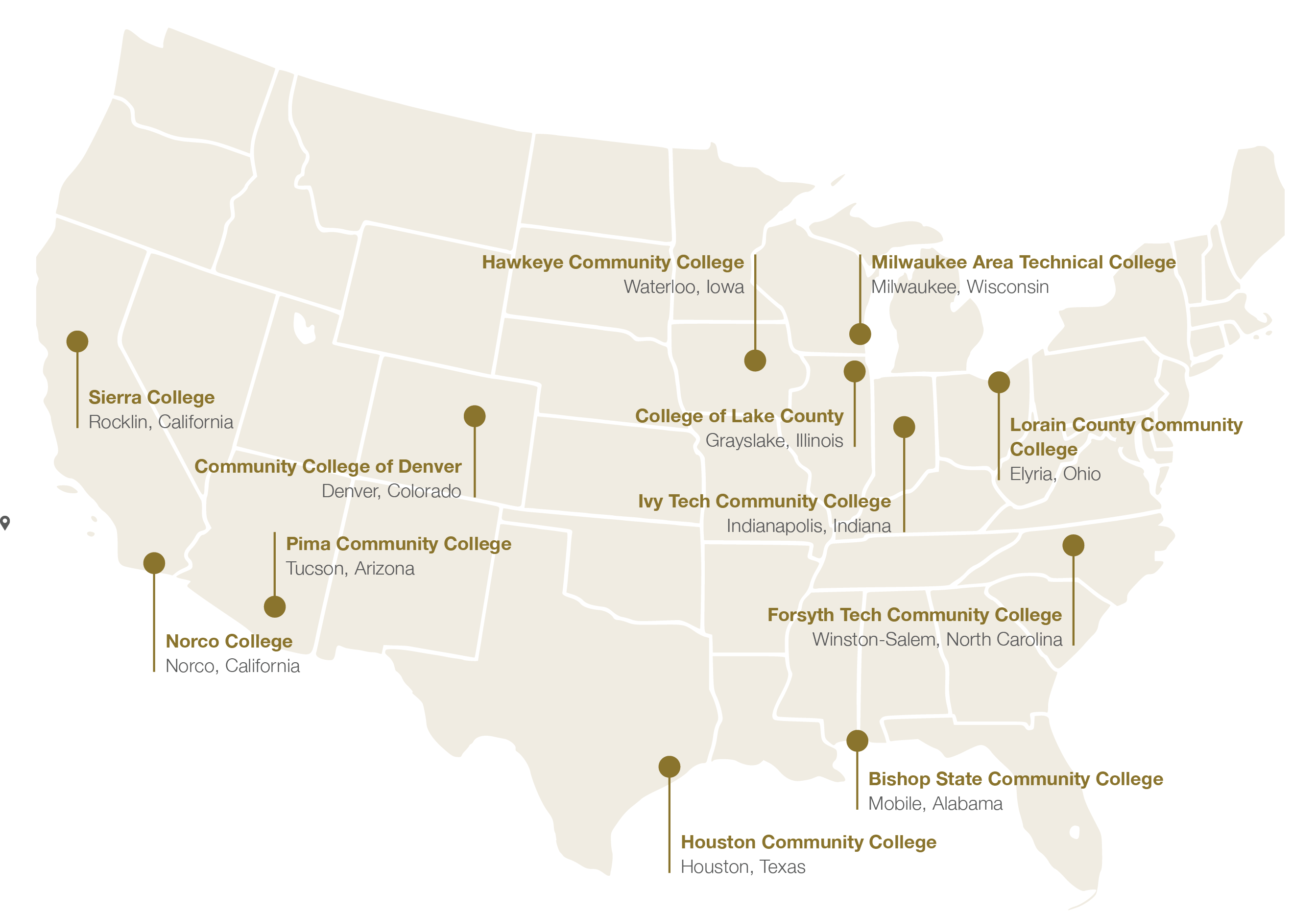
To help address occupational segregation, the has sponsored and to join forces with twelve community colleges with the goal of equipping Black, Latinx, Asian, and Indigenous Americans with 2,000 manufacturing credentials by September 2023. The colleges are:
The programs these colleges are creating will be designed to address occupational segregation in manufacturing by better understanding how colleges can utilize strategies such as (also adapted to teaching), cultural competency, and racially conscious industry partnerships.
A from the partners shares insights about how Black workers in particular are under-represented in the manufacturing industry and the significant occupational segregation in the sector.
I sat down with (), Fellow, and (), Senior Fellow, both at The Century Foundation as well as () from the Urban Manufacturing Alliance Advisory Board for an interview to learn more.
What are the major takeaways from the colleges in the so far?
Four months into the project, the team has discussed a variety of questions relating to a diverse manufacturing workforce including how colleges can identify and vet like-minded employer partners for the racially conscious partnership since not all manufacturing employers are equally committed to putting in the necessary effort for such partnerships.
The team and the cohort have also addressed how to train faculty to teach in a trauma-informed manner and how to recruit diverse students into an occupation that doesn鈥檛 look like them, especially at the top.
The team believes that equitable pathways into manufacturing jobs will require a shift around the 鈥渟kills mismatch鈥� narrative. Instead, 鈥渆cosystem partners鈥� including community colleges, employers, and intermediaries must focus on improving worker training and education as well as job quality for racial minorities once on the job.

The built a multi-million dollar facility on the east side of Buffalo, New York which is ninety-one percent Black and has a median household income $8,000 lower than the rest of western New York. The facility houses the state Manufacturing Extension Partnership office as well as space for the center and employers to allowing more Black prospective students to gain exposure to manufacturing jobs.
Baton Rouge Community College鈥檚 engages employers and community-based organizations to pursue racially conscious industry partnerships together.
鈥檚 exposes girls of color to manufacturing careers. This is an urgent issue as women鈥檚 employment in manufacturing has declined to . The program assists young women with career pathways in manufacturing with a focus on cultivating .

Community colleges should hire more Black, Latinx, and women faculty in their manufacturing programs. Having faculty who are culturally competent and diverse can help to recruit and retain underrepresented students. For example, recognizing that less than four percent of welders are women, in California hired women welding instructors and focused on building male allyship. Community colleges should also provide dedicated equity-focused marketing funds or airtime for their manufacturing programs and consider more programming within diverse communities.

Policymakers should fund sectoral partnerships between industry partners and community colleges and require equity metrics to track whether and how federal fund recipients are recruiting racially and gender-diverse students from community colleges. The Department of Labor should track outcomes on employment and completion and disaggregate the data by race and gender.
Shalin Jyotishi is a Senior Analyst on Education and Labor at 麻豆果冻传媒 and a Fellow in AI the World Economic Forum covering higher education, the workforce, tech, and policy. Connect with Shalin on and . Read his .
Enjoy what you read? Subscribe to our newsletter to receive updates on what鈥檚 new in Education Policy!
Founder and Director, Future of Work and Innovation Economy Initiative


