
Community Colleges Can Expand Pathways To Artificial Intelligence Jobs, but More Work Is Needed
A report by Georgetown's Center for Security and Emerging Technology (CSET) shares insights on community college-level artificial intelligence workforce training and where further investment is needed.

The artificial intelligence field has exploded over the last decade, making its way into nearly every industry. Demand for AI jobs is projected to grow at of other occupations, requiring more education providers to create programs to train workers for these jobs.
AI is broad and depending on who is asked, and the same ambiguity applies to the AI workforce. provides a pragmatic definition: Anyone who helps design, develop, and deploy is considered a member of the AI workforce.
The workforce spans fifty-four occupation categories ranging from technical talent, like software developers and data architects, to non-technical talent, like product managers and 鈥�,鈥� who use technical skills to explain the benefits of AI products to customers.
This inclusive definition adds clarity to the AI talent debate, which tends to overemphasize PhD-level technical talent. While talent of that caliber is a crucial part of national AI development, we also need more non-technical talent who have a functioning knowledge of the technology.
That is where community colleges must step in. We need for both jobs directly in AI and jobs in .
One-third of workers in the AI workforce . Employers can鈥檛 meet their talent needs by only relying on workers with a four-year degree, which limits the growth of the innovation economy and the ability of underrepresented communities to access these new jobs. That鈥檚 bad news for workforce development and .
AI-related occupations with high shares of workers with less than a bachelor degree.
| SOC Title | Share of Workers in Occupation with Less than a Bachelor鈥檚 Degree |
|---|---|
| Electrical and Electronic Engineering Technologists and Technicians | 81% |
| Information Security Analysts | 34% |
| Network and Computer Systems Administrators | 47% |
| Computer Network Architects | 46% |
| Computer Support Specialists | 54% |
| Web Developers | 32% |
| Logisticians | 57% |
Community colleges must train and diversify the AI workforce.
Community colleges are affordable, flexible, and enroll diverse students and have a historical role in workforce training for technical fields.
The agility of their workforce offerings empowers them to respond to employer needs quickly, which is key in fields like AI where the market is constantly shifting.
Some colleges use non-credit offerings as a 鈥渢est bed鈥� when training for emerging jobs like in AI and later build bridges to allow non-credit students to make use of stackable credential pathways that were previously only available to credit-bearing program graduates. Intel has partnered with community colleges to create educational pathways to AI and AI-related jobs鈥攕ome of these offerings are credit-bearing while others are non-credit.
Community colleges also have expertise in serving working learners including those with caregiving responsibilities. Colleges frequently offer wraparound services to address basic needs for their workforce students including free or low-cost access to childcare, food, housing, internet and technology, and transportation.
Finally, with the Science Act and expanded federal investments in the innovation economy, there may be for community colleges to help align technology and talent development in ways that didn鈥檛 exist in the past.
In an interview with 麻豆果冻传媒, Erwin Gianchandani, inaugural Assistant Director of the U.S. National Science Foundation's new highlighted the critical role of community colleges in training for both existing jobs and new jobs that may result from NSF's technology development efforts like in AI.
This year, the National Science Foundation also changed its definition of the 鈥淪TEM workforce鈥� to , affirming the mindset evolution.
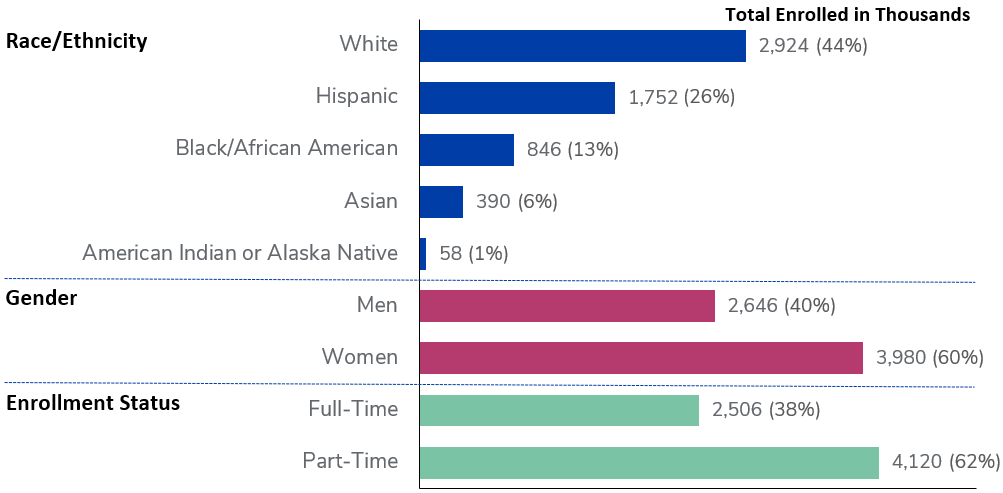
Source: NCES/IPEDS; CSET calculations.
But more needs to be done for community colleges to fulfill their potential as AI educators.
Although the labor market need exists and community colleges have the potential to prepare the AI workforce, shows that potential is still untapped.
There are promising efforts across multiple states, with a small number of AI-specific associate鈥檚 degrees, credit and non-credit certificates, and short-term offerings. Many of these programs are in partnership with employers like Intel and Amazon.
But when looking at community colleges broadly, these programs are outliers. There are few associate鈥檚 degrees and certificates awarded in fields of study related to AI technical and non-technical jobs.
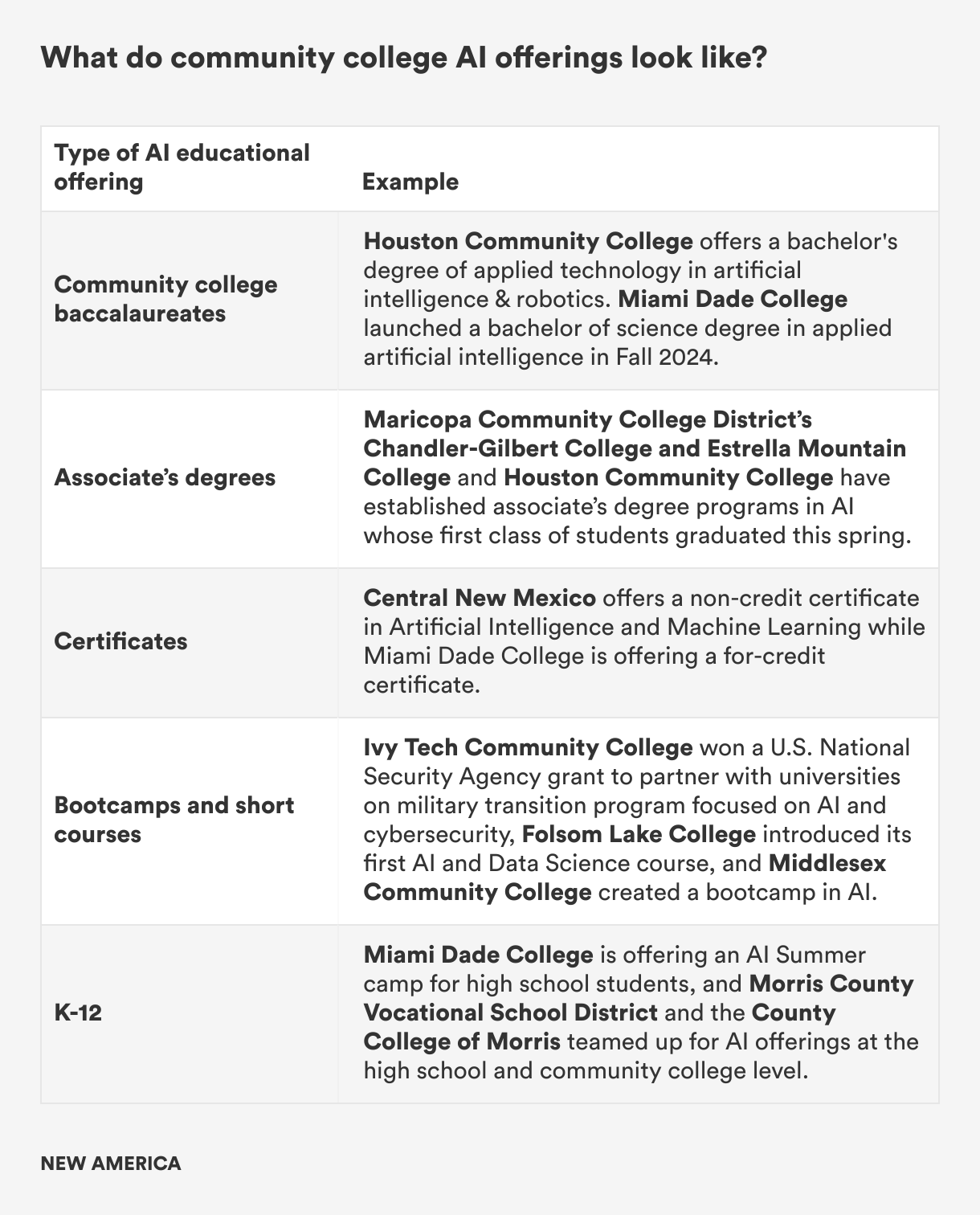
Several challenges contribute to the lack of AI offerings, some of which most community colleges face: , competing priorities for funds, and or lack of outcomes data, especially .
Other barriers impact AI-related programs specifically, like or the lack of for technical courses. It also takes an initial investment and support to stand up and sustain new workforce-oriented programs, something that schools have struggled with.
To respond to the middle-skill AI labor market, that is jobs that require more than a high school education but less than a bachelor鈥檚 degree, colleges must ensure that their non-degree programs are high-quality, co-designing programs with employers.
Plus, in twenty-five states, community colleges offer workforce-focused bachelor鈥檚 degrees, so in , a college could also address workforce needs through workforce-focused degree programs.

Source: NCES/IPEDS; CSET calculations.
Recommendations to strengthen community colleges as AI educators
All community colleges would greatly benefit from increased funding. More funds would empower schools to expand vital wraparound services, hire more staff for career counseling, outcome data collection and utilization, employer partnerships, and work-based learning.
Colleges, states, and systems should also take the following steps to strengthen their position in AI education:
- Colleges and economic development organizations must decide jointly whether and if to set up AI programs. AI investments must be strategic. Not all colleges or regions will have robust AI economies. Close collaborations, including a joint review of labor market information and discussions with local employers, funders, and states are key for priority alignment and funding streams, including shared grant proposals and cost-sharing opportunities. Ideally, these efforts should be aligned with broader of workforce development within regions or even states.
- Develop strong relationships with national employers. Local employers are most likely to hire community college talent, but large companies like Intel, Microsoft, Amazon, and Google can help build AI programs by providing course content, instructional tools, network facilitation, and faculty training.
- Ensure stackable pathways, even for non-credit offerings. Middle-skill AI jobs can lead to more advanced jobs. Even when using non-credit workforce offerings, colleges should ensure non-credit to credit pathways or credit-bearing options whenever available.
- Implement best practices from non-AI programs. AI may be a novel field, but colleges should draw on existing best practices shown to improve completion rates and outcomes such as , dual enrollment systems integration, , and enhanced college and career advising.
Enjoy what you read? Subscribe to our newsletter to receive updates on what鈥檚 new in Education Policy!
Luke Koslosky is a Research Analyst at Georgetown University's Center for Security and Emerging Technology. Follow Luke on .
is a Senior Policy Analyst on Education and Labor at 麻豆果冻传媒 and a Fellow in AI the World Economic Forum. Follow Shalin on and .
More 麻豆果冻传媒 the Authors

Shalin Jyotishi
Founder and Director, Future of Work and Innovation Economy Initiative
Issues
Programs/Projects/Initiatives
Related

Commerce Department鈥檚 Regional Tech Hubs 鈥� Where Do They Stand Today?

Announcing the 麻豆果冻传媒 & ACCT Work-Based Learning Capacity Building Cohort

麻豆果冻传媒 and ACCT Announce National Advisory Committee on Workforce & Economic Development
