Amaya Garcia
Director, PreK-12 Research and Practice
On Tuesday, after a , Betsy DeVos was confirmed as the country鈥檚 next Secretary of Education. Ms. DeVos is a with a history of using her private wealth to advance an education agenda framed around , including school vouchers that use public funds to provide families with a scholarship or stipend to attend the private school of their choice. With her confirmation finally settled, Americans are likely to hear much more about school vouchers. But do they work?
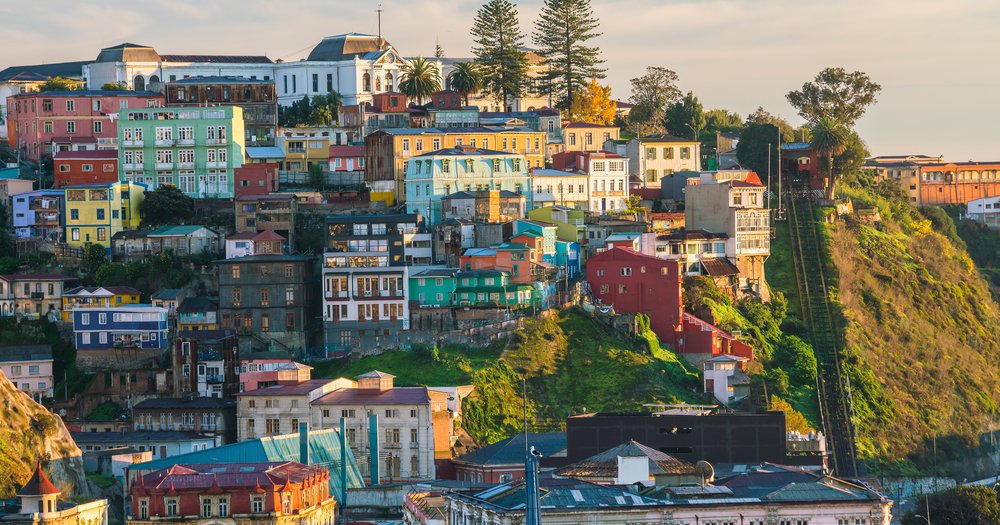
While many states in the U.S. have implemented school (to ), these programs have also been tested abroad in , the , and . Chile implemented a universal school voucher program 1981, as part of a series of ushered in by Dictator Augusto Pinochet, who rose to power in a 1973 of the socialist government led by the democratically elected Salvador Allende.聽
As Varun Gauri writes in his 1998 on school choice in Chile:
[…] The military regime鈥檚 technocrats restructured the labor market, introduced vouchers into public housing programs, legalized private health insurance while adding market elements to the public health system, turned over most of the social security system to private pension fund managers, transferred the management of schools and primary health clinics to municipalities, strengthened the municipal finance system, and created a voucherlike [sic] mechanism to finance both public and private schools. (p.11)
Pinochet鈥檚 economic policies were crafted by a group of economists (known as the ) who had trained with Milton Friedman at the University of Chicago. In education, Friedman is perhaps most famous for arguing that education policies should establish a 鈥渇ree market鈥� to foster parental choice and promote competition among schools. In a 1995 , Friedman wrote that 鈥渘othing else鈥� would 鈥減rovide the public schools with the competition that will force them to improve in order to hold their clientele.鈥� Chile鈥檚 voucher program has served as a test case for the Friedman鈥檚 and school choice proponents鈥� arguments about the impact these models have on student outcomes.
Chile鈥檚 transition to a 鈥渇ree-market鈥� education system in 1981 created three types of schools: public municipal, private subsidized, and private non-subsidized. Both public municipal and private subsidized schools accept vouchers, while private non-subsidized do not accept vouchers and cater to the elite. Families have substantial choice and are able to use their voucher in any participating school.The system is universal (open to everyone) and operates as a that is paid directly to schools, which means that school budgets are inextricably tied to student enrollment.
Chile鈥檚 voucher program has been widely studied and largely found to have , and minimal to no impact on .
A 2012 Organisation for Economic Co-operation and Development (OECD) highlights Chile鈥檚 high-levels of socio-economic stratification between public and private schools. According to the report, 80 percent of the most-advantaged quarter of students attend a private school, while only 38 percent of the least-advantaged students attend these schools. Chile鈥檚 system has been closely studied by Chilean researchers who find that school vouchers have only served to between schools. Researchers at the University of Chile and New York University found that children from families in the , who are more likely to use vouchers to enroll in private-subsidized schools.
Vouchers have worsened socio-economic segregation largely because of the program鈥檚 design and the limited availability of private schools in small, rural areas. First, private subsidized schools can charge additional fees or tuition (), which can limit access to low-income families and keep them in the public school system. One found that the self-reported monthly income of families who chose to attend public school was $304/month, which can make it difficult to afford the cost of fees. Indeed, these schools have an incentive to charge co-payments due to the fact that they can operate as a for profit business.
Second, private and public schools operate under different regulations. Until recently, private subsidized schools were able to screen, select and expel students based on their own criteria. Public schools do not have flexibility and must admit any student. As researchers Alejandra Mizala and Florencia Torche found in their on the socioeconomic stratification in Chile鈥檚 schools that 聽鈥渨hile the voucher sector serves a diverse population, voucher schools are socioeconomically homogenous 鈥� some of them appear to concentrate better-off families, while others focus on poor communities.鈥�
This type of student selection, where the highest-achieving were chosen by the private subsidized schools, led to an exodus of middle class students from Chilean public schools. The percentage of students attending public schools fell from more than 80 percent in 1979 to 42 percent in 2009. And by , just under 40 percent of students attended a public school, 52 percent attended a private subsidized school and 7 percent attended a private non-subsidized school. indicate that just under 40 percent of students from the attend a private school, compared to 60 percent of students from the third income quarter and 80 percent of students from the top income quarter.
These statistics reflect Chile鈥檚 larger societal structure, which is highly stratified by social class. Research suggests that parents often base decisions about where to enroll their children based on the student demographics of the school. Gregory Elacqua, Mark Schneider and Jack Buckley how parents in Santiago made school choices. While parents reported that academic quality was an important factor in their decision-making about what school to send their child to, their actual choices revealed that this decision was largely influenced by student demographics. In fact, 87 percent of parents only considered schools with similar student demographics.
To be sure, the increase in private subsidized school enrollment has been accompanied by the the private school sector, which grew from 2,425 schools in 1990 to 5,545 schools by 2009. Notably, of schools in Chile are for-profits that are largely run by former educators and are independent schools (not part of a franchise or network of schools).
If Friedman鈥檚 theory is correct, there should have been a commensurate decrease in the number of public schools, but that has not happened in Chile. In their widely cited on the impacts of Chile鈥檚 voucher program, researchers Chang-Tai Hsieh and Miguel Urquiola argue that it might be because 鈥減ublic schools did not face strong incentives to compete鈥� with the private sector. That鈥檚 likely due to the fact that public school budgets are supplemented by municipal governments, generally to help them absorb the loss of students. And like in the United States, closing neighborhood schools is a highly contentious process even in the face of declining enrollment and low student achievement.
Many researchers have attempted to examine the impact of Chile鈥檚 voucher system on student achievement, but little consensus has been reached. 聽Hsieh and Urquiola鈥檚 concluded that vouchers did not lead to improved student outcomes. other have similar findings and some that may actually do better at educating students than private subsidized schools. In contrast, other have found that private subsidized schools have better results than municipal schools (with comparable budgets) and a 2004 found that vouchers led to stronger outcomes for students across all socio-economic levels.
The majority of studies reveal the methodological constraints of examining the impacts of vouchers on student achievement and the difficulty of controlling for the selective sorting of students into schools (e.g. students and teachers are not randomly assigned to schools and many schools end up being fairly segregated by socio-economic levels).
On international measures, such as the , Chile has not fared well. In , Chilean students scored well below the PISA average in science, mathematics and reading. Specifically, the average PISA scores for science and reading were 493, but Chilean students鈥� mean scores in those areas were 447 and 449. Moreover, the difference in science performance between private and public school students was 46 points. These assessments serve to highlight the impact of socio-economic segregation on student achievement. 鈥淚n 2006 the variance of PISA test scores that was explained by socio-economic background in Chile was stronger than anywhere in the OECD…indicating that the school system needed to do more to help disadvantaged children catch up鈥� writes Nicola Brandt in her on Chile鈥檚 education system.
Chile鈥檚 government has implemented several reforms in order to correct some of the inequities created by the education market. In 2008, the Preferential School Subsidy law provided schools with a higher subsidy for students from low-income families. Private schools that accept the SEP subsidy must sign a contract with the Ministry of Education, which mandates that they implement a self-assessment, set improvement targets, design a 4-year school improvement plan and are prohibited from charging extra fees. The law鈥檚 impact has been to increase choice among low-income families and to accelerate enrollment losses at public schools. In 2016, only 36 percent of students were enrolled in a public school.
The General Education Law of 2009 prohibited private subsidized schools from screening and selecting students before grade six. The aim of the provision was to end this widespread practice and limit the socio-economic segregation of students. However, that this practice is still widely-used and that the law has been poorly enforced.
And in 2015, the government passed the School Inclusion Law, which eliminates parent co-payments (which were charged by 80 percent of private subsidized schools), creates financial incentives such as increasing the SEP subsidy, reaffirms that schools receiving a subsidy cannot select students, and eliminates for-profit voucher schools. These actions were inspired by a large, and successful, 2011 against (especially in , which has seen even larger impacts due to these policies) to implement policies to help ensure education is a 鈥溾��
What lessons does Chile offer to the United States? First, it provides a cautionary tale on the potential for voucher programs to exacerbate school socio-economic segregation. Here in the U.S., schools in urban areas are and policymakers are right to be concerned that universal voucher programs may exacerbate this problem. Second, Chile鈥檚 recent reforms highlight the importance of considering equity up front and ensuring that private vouchers schools are held to the same standards as public schools. Evidence from suggests that holding private voucher schools to different standards can foster the creation of low-quality schools that do little to advance student learning and achievement. Finally, the inconclusive evidence on boosting student achievement is a red flag for policymakers who believe that simply shifting students into a private school will lead to stronger academic performance. Voucher systems are no cure for the inequities that plague our education system.聽
Director, PreK-12 Research and Practice