
California鈥檚 New Data Dashboard and What It Means for English Learners
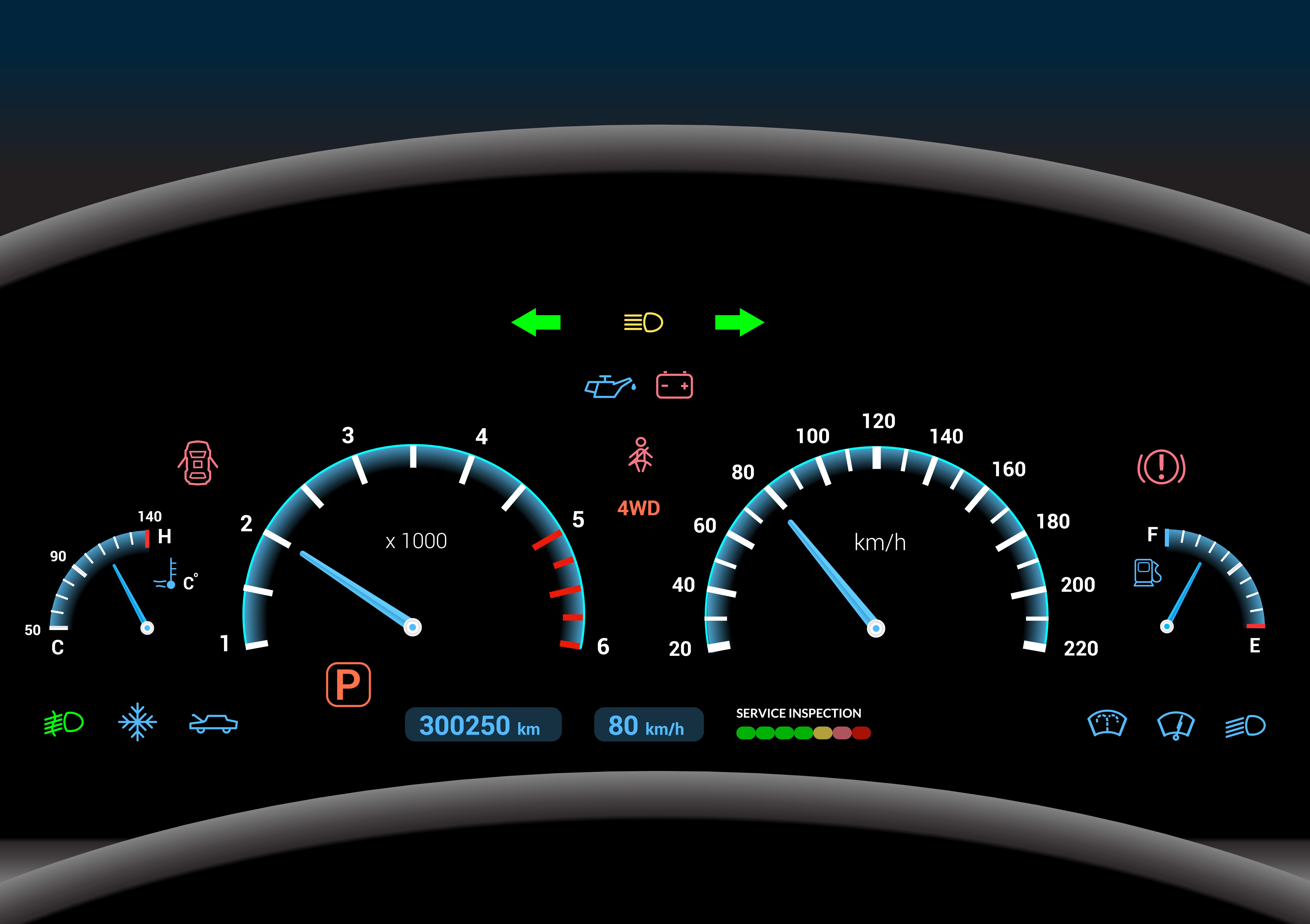
It鈥檚 hard to fix a problem you don鈥檛 know about.
It鈥檚 why cars have a number of well-lit signals in plain sight of the driver 鈥� the speedometer, the fuel gauge, and a variety of other indicator lights. Without these features, even a mundane road trip would be unthinkably dangerous.
Transfer this idea to education. As leaders proceed along their routes, aiming to equip students with a high-quality education for college and career success, they need timely metrics on what鈥檚 working and what鈥檚 not. Which areas are in great shape? Which need a tune-up? Straightforward data is vital for educators, families and school communities.
Along these lines, the California Department of Education unveiled a 鈥溾�� of website last week. The Dashboard is a color-coded system for tracking K鈥�12 student performance. It allows users to search by school or district. Blue is the highest possible rating, green is high, yellow is medium, orange is low, and red is the worst. In case documents are presented in black-and-white, the colors are displayed visually in circles, sliced like a pie. Blue, the best, is a full five slices.

The Dashboard California鈥檚 new accountability system, the Local Control Funding聽Formula (LCFF), signed into law by Governor Brown in 2013. The new law significantly changes how resources are allocated across the state. The changes intended to provide funds more equitably for students with learning and socioeconomic barriers.
Overall, the law鈥檚 funding mechanism has had a rocky start, including (frankly alarming) of financial in some districts. And yet, on planning and evaluation, the new data Dashboard is an important development of the law鈥檚 implementation.
Previously, state leaders calculated a school鈥檚 Academic Performance Index (API) based on annual standardized tests. Each school鈥檚 effectiveness was represented as a three-digit number. Having a single figure was clear and succinct. But its simplicity was also its greatest weakness. One number can’t possibly capture the breadth of how a school is operating.
The new Dashboard shows a more holistic picture of how schools are doing, measuring progress over time on multiple indicators. Naturally, that comes with a trade-off: greater complexity makes the system harder to understand.
In this way, the illuminates a key, inherent tension in education data: the competing priorities of simplicity and nuance. 鈥淭he positive is that [the Dashboard] is based on multiple measures,鈥� Cynthia Lim, who oversees data for the Los Angeles Unified School District, told . Dashboard indicators feature academic test results, high school graduation rates, suspension rates, and English learner progress. So, 鈥淸t]here鈥檚 going to be a learning curve鈥ut everyone is thinking this is a fairer way of looking at schools,鈥� Lim said.
In particular, the breakdown of multiple measures is a vital change for the state鈥檚 English learners (ELs), who comprise a of all ELs nationwide. With EL progress as one of the state鈥檚 high-profile indicators, the Dashboard聽makes these vulnerable students significantly more visible.聽For instance, the data enabled EdSource to EL progress was 鈥渞ed鈥� and 鈥渙range鈥� in 45 percent of schools and 38 percent of districts across California, which was 鈥渂y far鈥� the poorest-performing indicator. It was a quick analysis with revealing figures.
The key reason the dashboard is meaningful for ELs is the metric that the state chose to report. California鈥檚 progress indicator for ELs the percentage of students who moved up at least one level on the state鈥檚 English language test or who were reclassified as English proficient in the previous year. This data metric 鈥� progress in English proficiency 鈥� is one of the most valid of available ways to speak about current ELs鈥� success. , using data to describe ELs鈥� progress fairly and accurately is and often leads to misleading conclusions.
In particular, ELs are in somewhat of on academic English language arts and math tests in English, such as the new Smarter Balanced and PARCC assessments. By definition, most students still learning English will not perform well on these exams. Indeed, language to make EL scores of academic achievement valid in many cases. A uniform expectation, experts , 鈥渕ay appear to be rigorous鈥� but 鈥渁ctually ignores the developmental role that language proficiency plays in content area learning.鈥�
The quandary here arises because EL populations are not stable. So, just as ELs reach English language proficiency and have greater odds of success on the academic tests, many test out of the extra language services. Their datapoint leaves the EL subgroup; they鈥檙e no longer considered 鈥淓Ls.鈥� Essentially, EL subgroup data moves through a revolving door. From an evaluation perspective, this set-up is problematic. It masks success with these students and creates an EL 鈥渁chievement gap鈥� that can never actually .
That鈥檚 why, as long as students are classified as ELs, monitoring the year-to-year progress on California鈥檚 English language development is the crucial metric. It’s fairer and more accurate. (Note: the Dashboard still reports EL achievement on academic tests, so leaders can keep an eye on it 鈥� though they should do so cautiously.)
A similar EL growth figure was previously reported under Annual Measurable Achievement Objective (AMAO) 1 under requirements of the federal No Child Left Behind. But in general, that information was down in the weeds, by a dizzying array of acronyms, and buried on state websites, sometimes with broken links. If it felt like a treasure hunt for full-time policy professionals (like me!), the information was probably less accessible for more casual public stakeholders, including busy parents with eyes less-trained for .
So, for English learners specifically and all students broadly, the California seeks to strike a delicate, difficult balance between sophisticated yet readable data.
To this end, the state鈥檚 new data system features both simple information and detailed information for more curious users. The聽 reports a top-level, overall performance level on each indicator for districts and schools: one color.
An accompanying tool, , then allows users to 鈥溾�� further and examine how these colors are generated. The grid plots most recent results (鈥渟tatus鈥�) against the improvement of those results over time (鈥渃hange鈥�).聽The State Board of Education has聽assigned a color for each box on the grid that聽 of those two variables.
For the EL progress indicator, the final color reflects two questions: First, what percentage of ELs progressed at least one year on their English test (in this case, 鈥渟tatus鈥�)? Second, compared to last year, did this number of progress-making ELs grow or decline (鈥渃hange鈥�)? The idea is that poor performers for ELs can get partial credit for improving, and even the highest performers for ELs get dinged if they show evidence of backsliding.
As an example, take a look at the grid on EL performance in San Francisco Unified. Overall, the main Dashboard gives San Francisco Unified on EL progress. So… not great.

Next, take a look under the hood via to see how 鈥渟tatus鈥� and 鈥渃hange鈥� for ELs intersected. You can see which schools 鈥� called out by name 鈥攁re the blue high-performers, red low-performers, and ones who fall somewhere in between. This opens the door for more follow-up research and case studies of what鈥檚 working so well at the blue schools.

California Department of Education
Taken together, California鈥檚 move to more centralized, transparent EL data is promising, even as it will take time for users to adjust to a new system. Any effective, equitable reform for ELs must start with an accurate diagnosis of problems and successes.
Going forward, it will be critical for the state to incorporate feedback from users to make tweaks where possible. Though just a low-stakes prototype 鈥� for now, the state plans to use the Dashboard to inform accountability actions in the 2017鈥�18 school year. It will be important to watch how the tool evolves.聽For example, the state could pull all of the Dashboard’s academic indicators together for聽one, overall quality rating聽for each school, an idea have advanced.聽Moreover, to maximize impact, the state will need to publicize the Dashboard widely and provide trainings to truly empower families, educators, and advocates with the new data. The state鈥檚 overview , translated into , is a helpful, jargon-free start.
In any event, California鈥檚 colorful ratings already model a useful step for EL equity, using data to paint a more vivid picture of where disparities lie.
—
This post is part of 麻豆果冻传媒鈥檚 Dual Language Learners National Work Group.聽Click here for more information on this team’s work.聽To subscribe to the biweekly newsletter,聽click here, enter your contact information, and select “DLL National Work Group Newsletter.”
More 麻豆果冻传媒 the Author
Issues
Programs/Projects/Initiatives
Related

In 2026, States and Congress Will Need to Mitigate the Damage to PreK-12 Education

Celebrating the Education & Work Teams鈥� Impact at 麻豆果冻传媒

Ushering Bilingual Education for English Learners Through Uncertain Times