
Candace Rondeaux
Senior Fellow, Future Security
Drawing on five years of intensive research, this report is part of a series investigating the Wagner Group, Russia's shadowy paramilitary cartel, to shed light on its deception operations and map its expansive reach.
After years of operating in the shadows, Yevgeny Prigozhin, a long-time Kremlin fixer from Russia鈥檚 criminal underworld, began to experiment with and evolve an online brand for Russia鈥檚 secretive irregular contract forces amid the world-changing churn of the Arab Spring and Euromaidan crisis in Ukraine. Known today the world over as the Wagner Group, Prigozhin鈥檚 slickly marketed brand-name paramilitary has generated an online following that has morphed into a Russian social movement millions strong, fueling the recruitment of contract fighters. The Wagner Group brand has brought in millions of dollars in and military gear, making it a critical source of Russia鈥檚 force mobilization in Ukraine and elsewhere around the world. At the same time, the Wagner Group鈥檚 online life provides a new and rich鈥攖hough not uncomplicated鈥攔eal-time source of data and insights into the operations and personnel of Russia鈥檚 most secretive paramilitary organization.
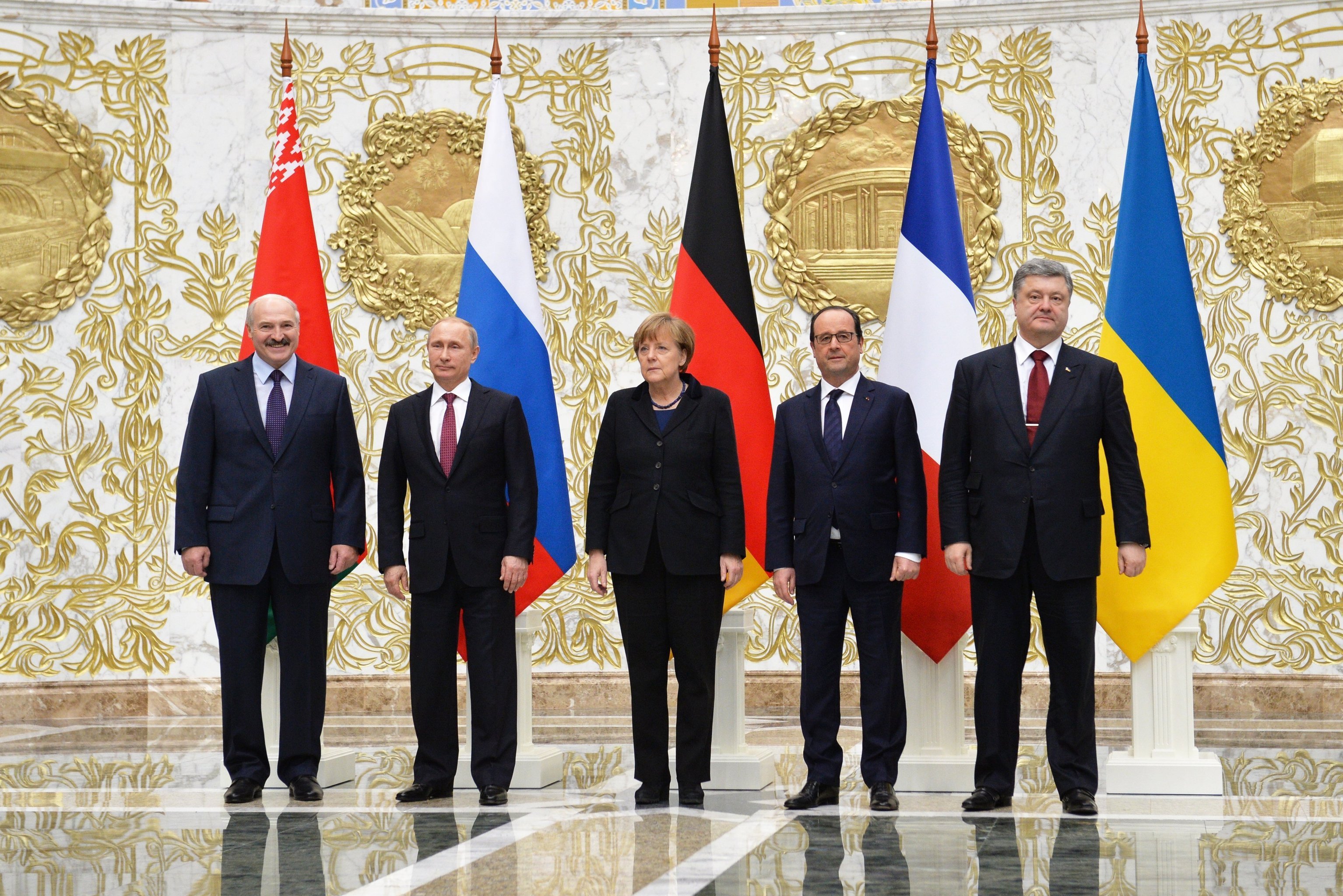
Before the Wagner Group was a 鈥済roup鈥� at all, it was merely a battlefield rumor. So much has happened since Russia launched its first semi-covert incursion into Ukraine in February 2014 that it often tends to be forgotten that the first high-profile mention of the Wagner Group did not occur until Russia began negotiating its second political agreement with Ukraine on the status of the Donbas region in early 2015. It was only after Russian president Vladimir Putin and Ukraine鈥檚 former president Petro Poroshenko cemented what became known as the that fragmented stories about the paramilitary group鈥檚 titular commander began to crop up. It would take many more months for that narrative to morph from a couple of brief mentions in the pro-Putin blogosphere into a series of Russian and Ukrainian language news stories about a shadowy Kremlin-backed paramilitary group that had adopted Utkin鈥檚 call sign Wagner as its moniker.
The first significant date in the evolution of the Wagner Group鈥檚 online brand is January 1, 2015, the day that , a pro-Russian separatist commander, was killed along with several others in the contested eastern region of Luhansk. It was then鈥攔oughly two weeks before the start of the bloody and epic in Donbas鈥攖hat one of the earliest known mentions of the Wagner Group appeared on the internet, and dark hints of the Russian government spin on the involvement of irregular contract fighters in covert operations in Donbas began to take shape.
A former Ukrainian officer at the Ministry of Internal Affairs (MVD), Bednov had famously been of torturing civilians and was a vocal critic of Russian efforts to broker a cease-fire with the Ukrainian government under the . It was widely assumed at the time that Bednov had been killed either because of his involvement in selling supplies on the black market or his political views or both. A day after news of Bednov鈥檚 death surfaced, Boris Rozhin, a ultranationalist Russian LiveJournal blogger who writes under the handle Colonel Cassad, posted a digest about the killing and that an unnamed Russian military veteran at the helm of a private military company called PMC Wagner was behind a deadly ambush on a convoy carrying Bednov and several members of his Batman Rapid Response Battalion.
Rozhin鈥檚 source for the allegation was none other than , commander of Rusich, a St. Petersburg-based paramilitary outfit with close ties to the one time self-proclaimed prime minister of the breakaway Donetsk People鈥檚 Republic and one of the most prolific agent provocateurs of Russia鈥檚 ultranationalist factions. The Colonel Cassad blogpost also referenced a by Marat Musin, another associate of Borodai, on ANNA News, a Russian propaganda outlet registered in Abkhazia, a breakaway region of Georgia where Borodai worked to promote Russia鈥檚 interest with his longtime friend , another source for the Wagner Group story. Rozhin, based in Crimea, posted another update the next day on his Colonel Cassad blog, alleging that a retired Russian special forces officer with the Russian MVD Vityaz counterterrorism wing named Evegeniy Wagner was head of the private military company behind the ambush of the . He included excerpts from several other pro-Russian separatist VKontakte accounts that suggested Federal Security Service (FSB) officers in Moscow had ordered Bednov鈥檚 killing. This chorus of posts showed Russian active measures at work. Hiding the real and emphasizing the false is a classic technique of . The practice of spreading disinformation by promoting garbled half truths anchored in spurious sourcing and manipulating political decision making has long been part of the Kremlin playbook of what Russians call 鈥減olitical technologist,鈥� another word for government-connected spin doctors common in Russia and other post-Soviet states.
The vagueness of the narrative, the overlapping ties between political influencers Borodai, Girkin, Musin, and Milchakov, and the circuitous sourcing bore all the hallmarks of a classic disinformation campaign. It seemed to be a page torn from a playbook that Borodai and Girkin first crafted two decades earlier in Chechnya, then repeated in Moldova and Georgia. After participating in the attempt against Russia鈥檚 former president Boris Yeltsin, Borodai and Girkin served as war correspondents for pro-Kremlin news outlets during Russia鈥檚 two wars in Chechnya. Borodai and Girkin also contributed regularly to Zavtra, a small pro-imperialist newspaper founded by ultranationalist .
Zavtra offered a loudspeaker for far-right Russian fringe figures like Zakhar Prilepin, an ex-special police (OMON) swat team commander turned novelist who spun tales of Russian derring do and sacrifice in Chechnya. One of 窜补惫迟谤补鈥檚 most famous contributors is Alexander Dugin, a political philosopher whose best-selling books such as paint Russia as the defender of civilizational power in Eurasia and conservative values under attack from a degenerate, liberal, and hegemonic West, led by Russia鈥檚 pre-ordained rival, the United States. Although there are philosophical shades of difference between Dugin and other Zavtra contributors, they all share a deep appeal for Russia鈥檚 oligarchy and many upper-caste members of Russia鈥檚 , the informal class of Russian military, intelligence, and law enforcement officers and politicians who have worked with Russia鈥檚 security organs.
Over time, Borodai and Girkin鈥檚 contributions to Zavtra helped them build political capital with far-right leaning Russian oligarchs like , their one-time employer. A St. Petersburg based ultra-Orthodox Christian nationalist and investment manager who heads Marshall Capital, Malofeev founded , a YouTube channel and website that serves as a soapbox for the U.S. sanctioned and is popular with Russia鈥檚 pro-monarchist and pro-imperialist sets.
All the above Russian ultranationalist influencers shaped the trajectory of what has come to be known as the , whose animating idea was to revive and reinforce Russian claims to a vast steppe land in southeastern Ukraine once claimed by Tsarist Russia as the governorate of 鈥淣ew Russia'' in the mid-eighteenth century. The area encompasses the district of Donetsk in the Donbas region, the strategically important port town of Odessa, and the industrial city of Dnipro. Reprising the playbook used in the 1990s and 2000s to reinforce Moscow鈥檚 claims to the disputed territories of in Moldova and Ossetia and in Georgia, in 2008 the Kremlin dispatched Borodai, Girkin, and , another Transdneister veteran, to advance Putin鈥檚 strategy of cultivating irredentist factions in Eastern Europe, especially Ukraine.
Under Russian national security law, military conscripts may only be sent into battle in territories where Russia has a stated claim and an authorization for the use of military force has been codified by legislation ratified in the State Duma. Invoking such a declaration so soon after the Russian streets over the debacle of the 2012 presidential elections would have been politically untenable, leaving one option: stealth mobilization of 鈥渧olunteer鈥� and 鈥減rivate鈥� pro-Russian paramilitaries, backed by a reprise of Russia鈥檚 playbook for disputed territories where conflicts have frozen into a political-military stalemate.
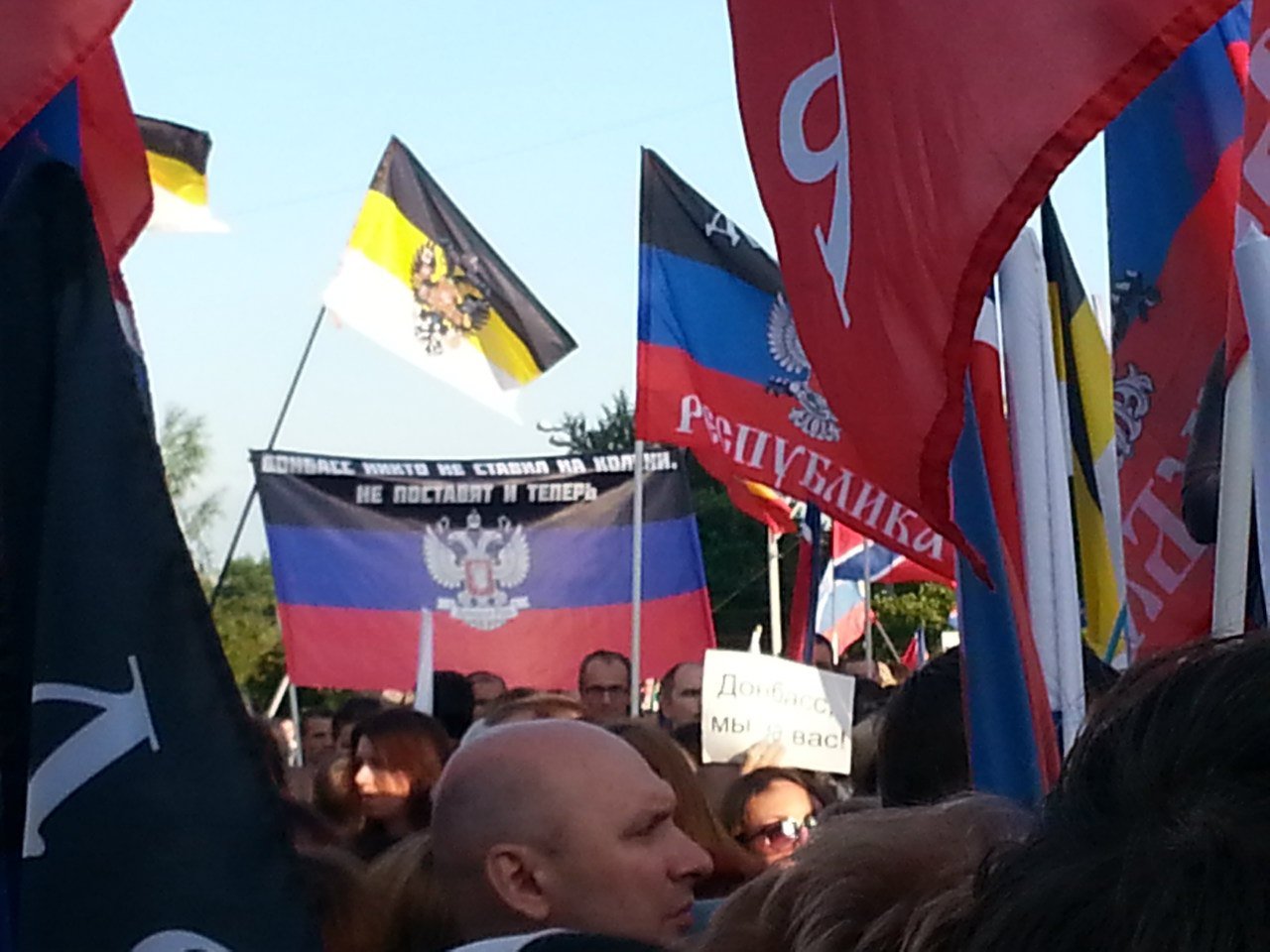
However, the massive size of the territory in question required highly experienced tactical fighters and a level of unit cohesion and discipline that was sorely lacking in the first year of fighting in the Donbas from 2014 to 2015. Making matters worse for the Novorossiya project, the Kremlin鈥檚 attention was split between two fronts鈥擲yria and Ukraine. As Russian skirmishes with Ukrainian forces reached a costly and feverish peak in late 2014, the crisis in Syria began to bubble over the rise of the Islamic State in Iraq and Syria (ISIS) and brutal chemical weapons attacks by the Syrian regime. Under pressure from U.S. and European sanctions, and already contemplating a full-scale intervention to support the beleaguered regime of Syria鈥檚 Bashar al-Assad, Putin began quietly laying the groundwork for a negotiated settlement with Ukraine designed to give Moscow a bit of breathing room.
Killing off the Novorossiya project became a political imperative. The Wagner Group was formed from an amalgam of Russian fighters dispatched to Donbas in the early stages of the incursion who were later tasked with eliminating pro-Russian separatist commanders who refused to capitulate. The elimination of rogue Novorossiya commanders also conveniently gave Putin and those in his close inner circle, like Prigozhin and FSB director , a chance to consolidate pro-Russian separatist paramilitary groups and redirect the energies of more competent Russian contract commandos toward a looming 2015 counter-offensive against Islamic State fighters in the oil, gas, and mineral rich region of Homs, Syria. The Wagner Group鈥檚 operations there further established the usefulness of Prigozhin鈥檚 networks to the Kremlin. Prigozhin was able to simultaneously start evolving a mythos around the Wagner Group鈥檚 online brand and divert attention from Russia鈥檚 sanction-busting delivery of embargoed weapons and services across the Baltic Sea and through the Mediterranean. Successful management of what became known as the helped Prigozhin cement his reputation as an expert broker for the Kremlin and Putin鈥檚 wealthiest friends. Absent the above context, it would be hard to connect the dots between Prigozhin鈥檚 interests, the rise of the Wagner Group, and rumors in the Russian blogosphere about who was behind the assassination of Bednov, the rogue pro-Russian separatist commander of the Batman Battalion.
The Wagner Group story began to take on a viral quality several months after initial reports of Bednov鈥檚 mysterious killing surfaced in early 2015, followed in short succession by the of several other pro-Russian separatist commanders who had championed the Novorossiya project. In June 2015, an online news site called Ukraine Media Crisis published an that repeated the initial claim posted on Rozhin鈥檚 propagandist blog that a Russian special forces colonel named Evgueni Wagner (sic) was responsible. A few months later, on October 15, 2015, one of the mainstream Russian-language news accounts mentioning the Wagner Group appeared in Fontanka, a St. Petersburg based news outlet. Written by Denis Korotkov, a former military veteran and MVD internal affairs officer turned investigative journalist, the expose explained in rich detail how a group of ragtag contract Russian soldiers fighting under a retired Russian special forces officer nicknamed Wagner came to work on a security detail in Syria.
Media coverage of the Wagner Group began to include descriptions of its commander Dmitry Utkin, a Russian military veteran who fought in Afghanistan and Chechnya and served in a secretive special forces unit of Russia鈥檚 military intelligence branch (GRU), stories that bolstered the Wager Group鈥檚 mythos while diverting attention from leaked reports of Russian battlefield missteps and the cartel-like structure that supports the group. Russian news outlets noted that Utkin was a fan of Adolf Hitler鈥檚 favorite classical composer Richard Wagner and adopted the call sign Wagner as a tribute to the Nazi leader. Utkin鈥檚 nickname was a triple entendre. It was also a reference to , a Nazi general who served as Germany鈥檚 quartermaster and head of rear guard forces and supported the operations of Einsatzgruppen paramilitary death squads. Utkin, a helicopter pilot by training, may have also adopted the Wagner call sign in a not so subtle nod to a famous scene from the movie in which American soldiers slaughter villagers in a helicopter attack in Vietnam to the music of Wagner. Later media coverage indicated that Utkin followed the , a pan-Slavist pagan movement popular with anti-immigrant white supremacist factions within Russia鈥檚 militarist constellations. Utkin reportedly retired from military service in 2013 and went on to work for the Moran Security Group, a St. Petersburg based military security firm.
Oddly, none of 贵辞苍迟补苍办补鈥檚 early coverage鈥攐r continuing press coverage鈥攐f the Wagner Group mentioned that Utkin鈥檚 one time employer, the Moran Security Group, counted among its Russia鈥檚 largest insurer, SOGAZ, which is partially owned by Gazprom, the world鈥檚 biggest gas company. Whether intentional or not, the omission of Moran Security helped Prigozhin mask the connections between Russia鈥檚 oligarchy and paramilitary contingents working under contract for Prigozhin鈥檚 firms. Although Russian citizens are prohibited by law from serving as mercenaries in foreign wars, a small number of Russia鈥檚 paramilitaries operate under a set of laws and executive decrees that allows them to provide services on contract to Russian state conglomerates that the Kremlin deems strategic in nature. These include Russia鈥檚 state arms conglomerate Rostec as well as energy industry giants Gazprom, Tatneft, Rosneft, and Stroytrangaz.
All five state-owned firms are headed by Putin鈥檚 oldest friends from the days when he was a KGB agent. In effect, this schema allows Putin鈥檚 closest inner circle, through frontmen like Prigozhin, to manage the cartel-like structure that constitutes what many think of today as the Wagner Group. Although the details of these connections were readily available to anyone interested at the time, they did not surface in any of the subsequent articles Fontanka published over 2016 about the Wagner Group鈥檚 exploits in Syria. Instead, a good deal of Russian language reporting in mainstream outlets like Fontanka appeared to draw on a mix of accounts shared by disgruntled Wagner Group employees, leaked documents, blogs like Rozhin鈥檚 Colonel Cassad, and tidbits picked up from military-themed VKontakte groups run largely by anonymous users.
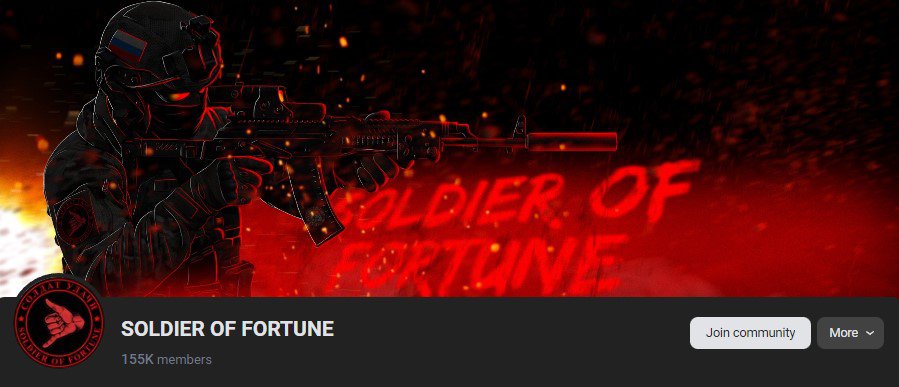
As more traditional news coverage about the Wagner Group鈥檚 activities began to percolate in the headlines of more established information venues, the narrative of Russia鈥檚 premier paramilitary cartel was starting to take on new dimensions in social media online. On the Russian internet, or RuNet, as it is often called by Russian speakers, VKontakte emerged as the primary vector for updates about the Wagner Group鈥檚 various deployments. One of the earliest detectable references to the Wagner Group on ultranationalist VKontakte groups was shared in 2016 among followers of a group account dubbed unironically Soldiers of Fortune, or Soldat Udachi in Russian. The owner of the Soldiers of Fortune VKontakte account refers to himself only as Andrey and the account鈥檚 origin date is unknown, but the account鈥檚 profile image bears the distinctive red beret associated with Russia鈥檚 MVD special forces gendarmerie troops and posts originate at least as far back as .
A fanboy site that publishes nostalgic news tidbits about the Russian special forces and tips about the mercenary lifestyle, Soldiers of Fortune may have been one of the first accounts on VKontakte to link to PMC Wagner-Military Review (效袙袣 袙邪谐薪械褉邪 – 胁芯械薪薪芯械 芯斜芯蟹褉械薪懈械), one of the very first known accounts to reference the Wagner Group directly in its name. Created in early 2018, the PMC Wagner-Military Review VKontakte account quickly became a leading source of the most up-to-date news about Russia鈥檚 military contractor industry.
Over the last five years of research, we have found that much can be divined about Russia's military manpower challenges simply by monitoring the patterns embedded in the metadata of the Wagner Group鈥檚 online followers. This insight was further reinforced for us by other digital traces in the data such as the geocoordinates tagged to photos uploaded by VKontakte users in the group. The scope and timing of Wagner Group鈥檚 varied missions abroad in locations like Libya were readily apparent in the thousands of posts that were routinely uploaded to the VKontakte account on an almost daily basis. Many of those posts carried geocoded tags that could be readily mined using open source code. The platform in this respect acts almost like a radar device picking up signals from remote locations where Wagner fighters might be deployed before they can be fully detected in the field. Posts also serve as a kind of weather vane showing which way the winds are blowing among Russian ultranationalists when it comes to upcoming or ongoing foreign deployments and perceptions of Russia鈥檚 political and military leadership.
Within Russia, this set of information allowed us to corroborate other sources of information about troop origins and flesh out a picture of recruitment and deployment patterns that had only been known by its outlines. In our analysis in 2020 of a set of about 9,500 users who expressed interest in the Wagner Group and claimed past or present service in a variety of Russian military units, we identified a subset of about 380 who professed interest in the Wagner Group and claimed past or present service in a variety of Russian military units. Their chat logs showed they gave unit affiliations indicating that they had served in spetsnaz or special forces units headquartered in the Southern and Western Military Districts of Russia. This aligned with reporting from multiple sources indicating that Wagner Group fighters were recruited and managed primarily through organizations based in St. Petersburg, the headquarters of the Western Military District. It also corroborated that Wagner fighters trained and deployed from a base in Molkino that is adjacent to the headquarters for the GRU鈥檚 in the Southern Military District.
Over the last year, our analysis of a separate subset of roughly 25,000 subscribers to the Wagner VKontakte account again showed a high prevalence of users indicating they served in units in the Southern and Western Military Districts. Collected and analyzed from August to December 2022, the data corroborates our initial supposition that the vast majority of those who identify interest in the Wagner Group brand come from the military districts in Russia that historically had the greatest number of contract-based units and were responsible for spearheading combat operations in Syria and Ukraine as well as delivering military equipment and services to countries where Russia entered into military-technical agreements such as the Central African Republic.
For example, Russia鈥檚 Southern Military District has been the home of the 58th Army in Vladikavkaz since 2010, when in response to missteps during the 2008 Russian assault on Georgia the Ministry of Defense Russian forces into more streamlined strategic commands. The 58th Army transitioned from a partially conscript-based force to contract-based troops, or kontrakniki鈥攖he Russian equivalent of enlisted professional soldiers. On paper, that means the entire division is manned by enlisted soldiers and officers as opposed to conscripts. In reality, the 58th Army is one of several Russian divisions that historically suffered manpower gaps and turned to conscripts to fill out billets that should in theory be manned by professional soldiers.
This not only fits with a general pattern observed in the data, but is backed up by additional evidence gathered from open sources. Two years after the 58th Army transitioned to contract billeting, its command went to General Yevgeny Nikiforov, who was to be in contact with Wagner commander Dmitry Utkin in 2015 and in with Prigozhin, as corroborated by expert from a 2022 UK parliamentary inquiry into the Wagner Group. In December 2022, Nikiforov鈥檚 appointment to chief of the Western Military District following widespread reports of in Bakhmut seemed to be a hat tip to Prigozhin鈥檚 growing influence.
As its online presence expanded, the Wagner Group began to seem as much an experiment in branding as a critical source of manpower. In mid-2019, an odd series of short videos depicting desert patrols in Syria began appearing in the PMC Wagner-Military Review feed. The videos bore a semi-transparent watermark of a skull and crossbones insignia, with the words Reverse Side of the Medal emblazoned above and True to Yourself below; a Telegram channel bearing the same name and insignia was created in October 2019. The shaky mobile phone videos showed men swathed in balaclavas and carrying kalashnikovs riding atop infantry fighting vehicles, accompanied by pop music that gave them an early MTV-like quality.
鈥淭he Wagner Group began to seem as much an experiment in branding as a critical source of manpower.鈥�
Although the details of who originally launched the VKontakte group and when it was started were deleted from the source code, the site鈥檚 star blogger Maxim Fomin, whose nom de plume is Vladen Tatarsky, has made it clear that he is in the lead. With his sly bravado, trademark beard, and sharp commentary, he presents as an authoritative voice of Russia鈥檚 conservative mercenary culture. A Reverse Side of the Medal (RSOTM) YouTube channel was launched around the same time as the original VKontakte account in 2019. Also known as The Grey Zone, the has morphed multiple times as YouTube has struggled to keep up with takedowns of controversial Russian propaganda material. RSOTM is one of several dozen Wagner-themed social media verticals that sprang from the original cluster of VKontakte accounts we first identified four years ago.
Since then, user membership in Wagner-themed social media verticals as well as recognition of the Wagner Group brand鈥攙isible through Google search trends in Russian and English鈥攈ave grown exponentially almost in lockstep with Russian and international media coverage of the Wagner Group鈥檚 activities and reported sightings of Russian mercenary contingents and dustups in far flung locations. Incidents like the clash between Wagner Group fighters and U.S. special forces in February 2018 and the only a few months later of three Russian journalists reporting on Wagner in the Central African Republic generated significant spikes. Similar trends were visible in Google search data around the time U.S. federal prosecutors tried and in 2020 to try Prigozhin in court charges of election interference: searches for the Wagner Group, Prigozhin, and related terms in Russian, English, and Ukrainian spiked. The symbiotic relationship between social media and the news cycle is not all that surprising. But the fact that Prigozhin and his team appear to have capitalized on the complementarity of the two to build up such a massive online following is striking. Over the last year, since the start of Russia鈥檚 full-scale invasion, Prigozhin has posted more than a dozen statements affirming his connections to the Wagner Group on the VKontakte social media account for his holding company Concord Management and Consulting.
Yet, signs that Prigozhin and other Kremlin-connected associates of Putin were gearing up to leverage the extensive reach of the Wagner Group鈥檚 brand well predated Prigozhin鈥檚 public admission of his leadership role. In November 2021, a slick Wagner Group recruitment website written in English and French was registered anonymously in an apparent bid to attract new fighters to missions in Francophone Africa. A month later in December, and only three months before the start of the Russian invasion of Ukraine, that SOGAZ, one of Russia鈥檚 largest insurers and a spinoff of the state run energy giant Gazprom, would purchase a tranche of shares in VKontakte that would give Gazprom control of the world鈥檚 most popular platform for Russian speakers. The deal entailed a at VKontakte that put Vladimir Kirenko, vice president of state-owned Rostelecom, in charge of leading the social media company. The complex deal additionally awarded shares of Vkontakte to a Russian company called MF Technologies. Gazprom also owns the majority stake of MF Technologies, but a small slice鈥攁round 10 percent鈥攐f shares are owned by Rostec, Russia鈥檚 massive state arms conglomerate.
The ownership shuffle of VKontakte, just before the launch of the Wagner Group鈥檚 largest foreign deployment outside Russia, gifted three of Putin鈥檚 longest serving allies鈥擸uri Kovalchuk of SOGAZ, Alexei Miller of Gazprom, and Sergey Chemezov of Rostec鈥攚ith an iron grip on one of Russia鈥檚 most valuable media companies. More importantly from Prigozhin鈥檚 perspective, building and promoting a recognizable brand under the Wagner Group umbrella gave him a further leg up as a premier provider of management services for military expeditionary missions. The December 2021 sale of VKontakte also tied together several other touchpoints between Prigozhin鈥檚 business interests and those of Putin鈥檚 most loyal backers. Arms conglomerate Rostec holds a majority stake in KBP Instrument Design Bureau, which staffed the illicit delivery of weapons with Wagner Group contractors to sanctioned actors across the Middle East. SOGAZ, Russia鈥檚 largest insurance company, provided health services to several Wagner Group fighters convalescing from injuries while fighting in Libya, Ukraine, and Syria. Importantly, SOGAZ is also a leading re-insurer of several Russian state energy companies that are stakeholders in pipeline production facilities guarded by Wagner Group detachments, including Transneft. Gazprom has an indirect stake in a gas production site in Syria where two linked Prigozhin firms, Mercury LLC and Velada LLC, have been by Syria鈥檚 national petroleum company.
As we detail further in this series, Prigozhin鈥檚 business prowess and social media chops are also proving to be an important factor in helping recruit, equip, and pay its contract soldiers on Ukraine鈥檚 frontlines. One of our other most startling findings is the extent to which the virtual ties between leading Wagner Group linked field commanders, professional propagandists, and financiers map to the real world of field operations in Ukraine and elsewhere in the world. Data makes clear that VKontakte and other social media platforms like Telegram have also been vital to helping Wagner fighters raise hundreds of thousands, if not millions of dollars in equipment and digital currency donations.
By far the biggest takeaway is that VKontakte has served for close to a decade as the primary vehicle for mobilizing a virtual army of Russian ultranationalist online influencers and as a critical communications tool for the upper ranks of the Wagner Group鈥檚 leadership, Russian special forces officers, and top members of the a St. Petersburg based White supremacist violent extremist group. Prigozhin has been able to build off of those pre-existing real links at apparently minimal cost to pull together one of the most far-reaching brand marketing networks on one of the world鈥檚 largest social media platforms without the apparent detection of Western intelligence agencies until just before the start of the Russian offensive in 2022.
All of the above should raise serious concerns for U.S. and EU regulators and major tech companies such as 鈥攐ne of VKontake鈥檚 largest mobile market intermediaries鈥攚ho are trying to thread the needle on maintaining compliance with Russian sanctions and managing profit margin and market oversight concerns. With the war in Ukraine likely to drag on for years, much more serious and informed debate needs to take place not only in Congress and the EU Parliament but in Silicon Valley board rooms. As we lay out in detail in this series, the new geopolitics of digital technologies and the power they hold to mobilize millions to violence requires that stakeholders at every level鈥攑rivate, public, and civil society鈥攖ake a more proactive stance on adopting tech governance strategies that promote greater global stability or risk fueling conflict escalation. Further inaction is not an option.
Senior Fellow, Future Security